Run the rowing season without spreadsheet chasing
RowHQ brings crew lists, shell bookings, river conditions, subs and training into one practical club system. It suits the southern summer rhythm, when the roster fills and plans change quickly. Members see what they need before reaching the shed. RowHQ is live now, with free use for clubs under 21 active members.
- Free up to 20 active members
- Nothing to install
- One login for the whole club
See RowHQ in 96 seconds
Follow a member through sessions, card payments and training on their phone. See Concept2, the club globe, safety flags and cox grades using a sample club.
What is rowing club management software?
Rowing club management software is the shared record for boats, crews, members and outings. It knows which shell is serviceable, which rower sits where, who can steer and who has paid their subs. That is different from a general booking tool, which may reserve one boat for one person but cannot represent the entire crew. For a Rowing Australia club running through the southern summer, it also keeps sessions and racing deadlines in view while the committee manages safety records, bank transfers and last-minute changes.
Conditions first, then the next session
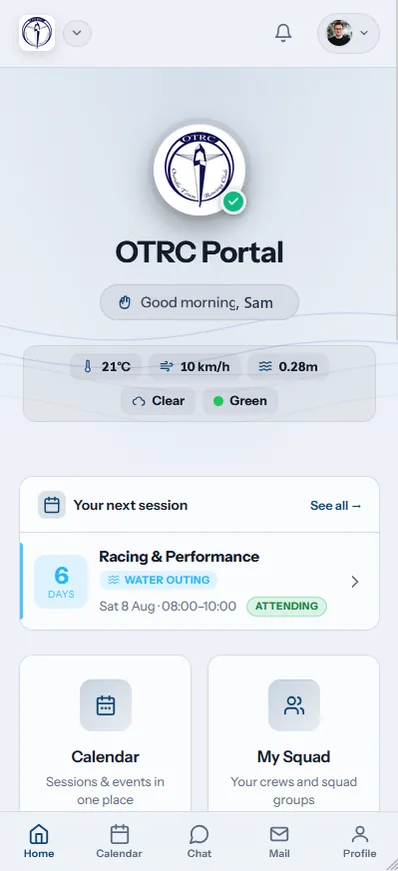
The phone image is a real RowHQ member dashboard. Temperature, wind, river level and flag status run across the top. The member's next session and attendance sit underneath, followed by the club tools. A rower can check the plan at breakfast without installing an app or chasing a coach for an update.
- Live river details give members the current picture before they head towards the shed.
- Attendance sits with the coming session, giving the coach one clear list for the crew.
- The browser dashboard keeps club tools together and does not require another app update.
RowHQ on a phone. Use it in any browser with nothing to install, or get the app:
What rowing asks for that generic club software does not do
Any club platform will hold your members and take your subs. These are the parts clubs end up running in a spreadsheet alongside it.
Book a shell with its full crew
One member cannot reserve an eight and leave everybody else guessing. The booking needs all eight rowers and the cox attached. That gives coaches and the shed a true view of who plans to launch.
Treat the lineup as part of the boat
Bow and stroke side are not labels you can ignore. Sculling, sweep and coxing experience affect every change. Editing individual seats keeps the balance visible when somebody drops out close to a session.
Stop a faulty shell being booked again
A fin, rigger, shoe or blade fault belongs against the equipment record. Once reported, it should remove that shell from availability. The committee gets a history, and the next crew does not carry damaged kit to the water.
Let conditions change the plan once
River level, navigation restrictions, closures and the club flag can alter an outing. Record the decision beside the session and tell the squad together. That is faster than repeating the same message across several WhatsApp groups.
Keep each rower's clearances close
Steering permission, swim competence and capsize work decide where a rower may go. The committee needs an accessible record rather than another folder. A current member profile makes those limits visible before the crew reaches the landing.
Hold summer deadlines beside the training plan
The peak season runs roughly October to March. Entries, declarations and substitutions arrive alongside regular training. Connecting those dates to crews matters because a missed declaration deadline takes the crew out of the race before the trailer leaves.
The season in Australia
The season runs through the southern summer, so the peak is between roughly October and March.
This is the opposite way round to Britain and North America. The Australian Rowing Championships were held in late March in 2026 and are scheduled for mid March in 2027, and Australian Sailing runs a split-year season labelled across two years for that reason.
That matters for the software because a season is not a calendar year. Memberships, subs and duty rosters all run on the club's season rather than on January to December, and a system built around the wrong one makes every renewal a manual job.
Dates checked against Rowing Australia on 28 August 2026.
What RowHQ handles
The short version. RowHQ has its own site with the full detail, demos and pricing.
Shell booking
See available boats and stop overlapping bookings without the shed sign-out book.
Crew seat planner
Adjust every seat and crew change in one place, not a spreadsheet.
Training attendance
Coaches can review session schedules and attendance before training begins.
Regatta management
Keep event planning and regatta entries inside the club system.
Rower portal
Members open one account for sessions, crews and club notices.
Committee figures
Put useful club numbers before the committee without chasing people.
RowHQ, actually running
Screens from the live product, not a mockup. There are more of them, and a demo you can click through, on the RowHQ site.
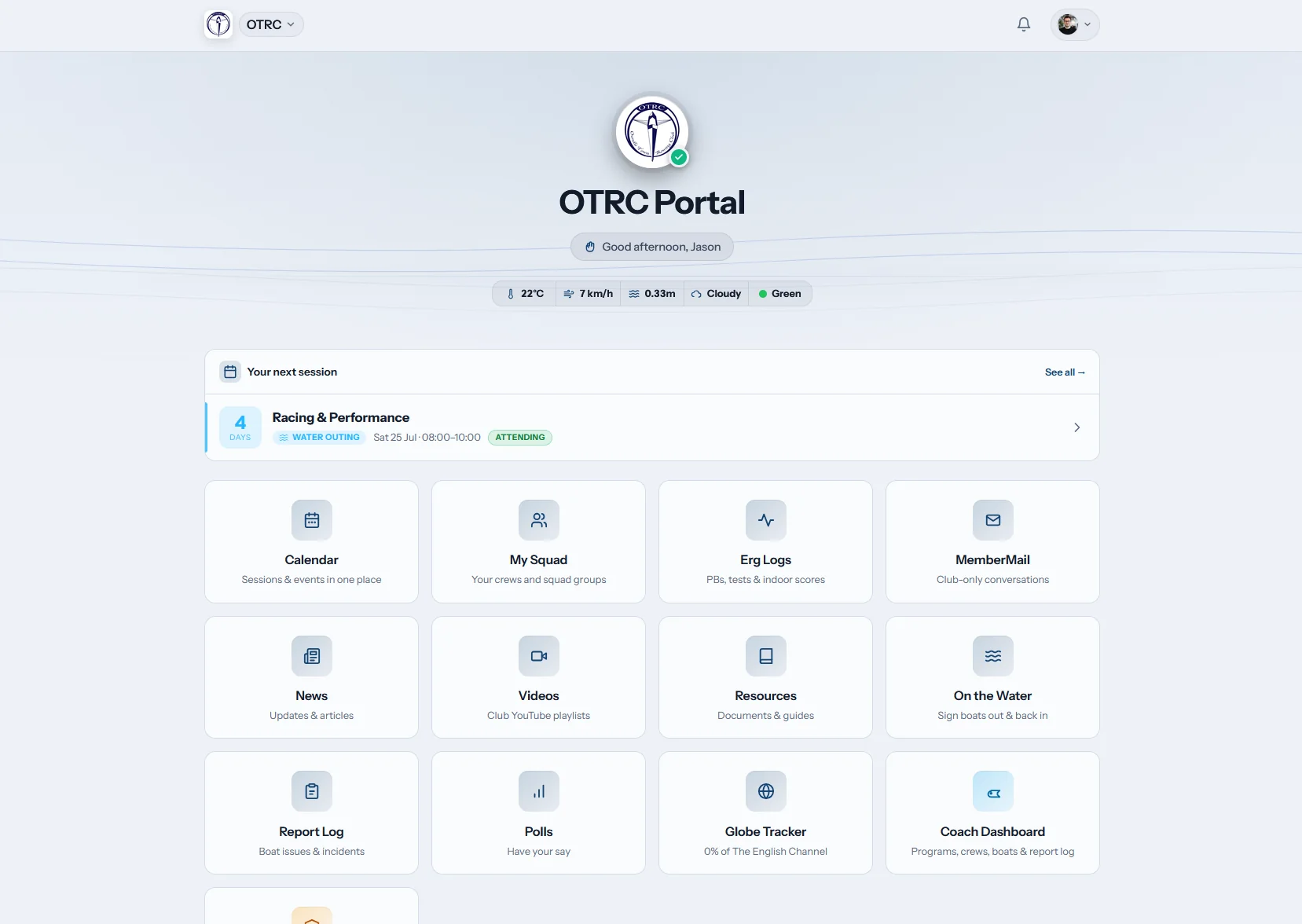
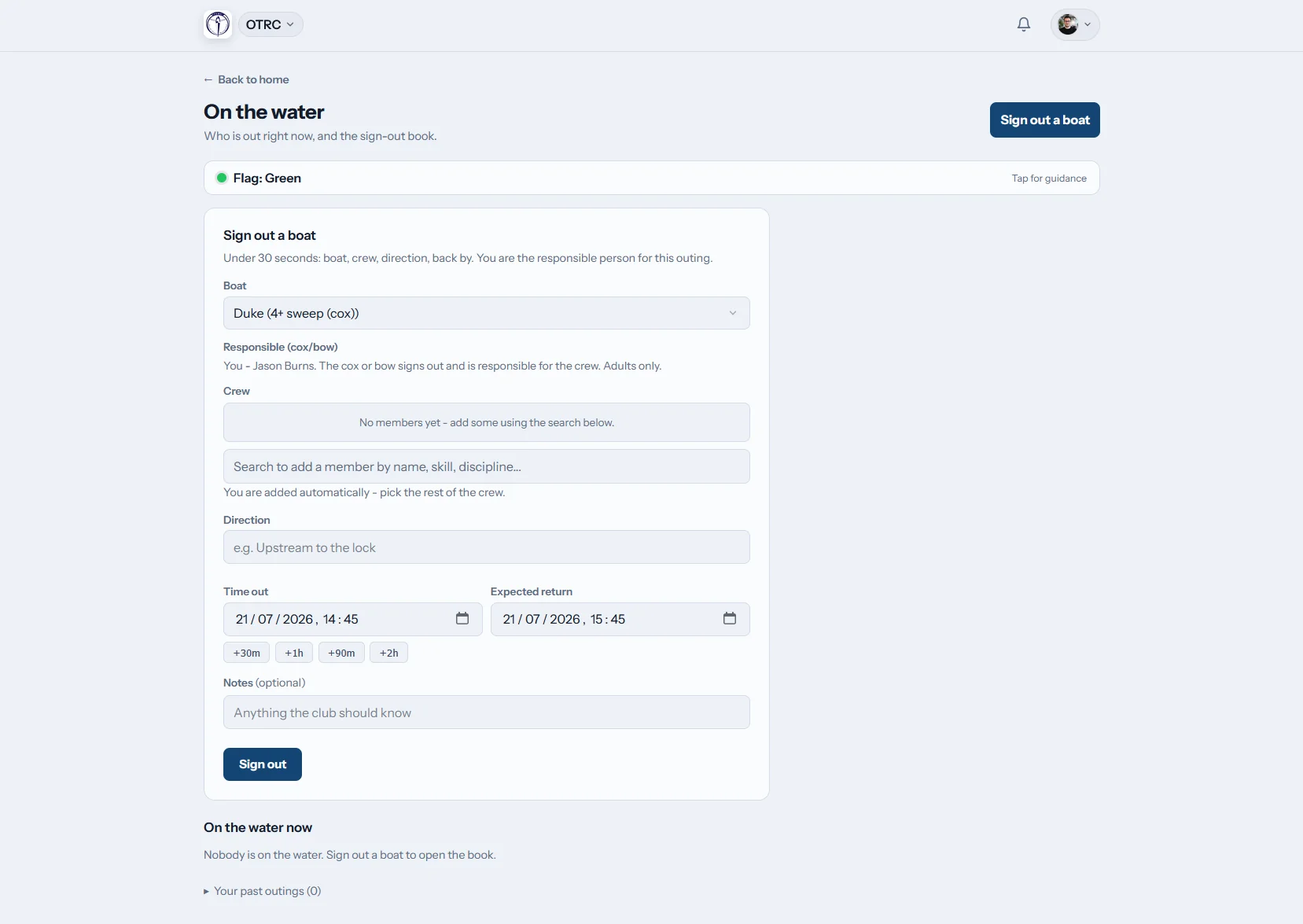
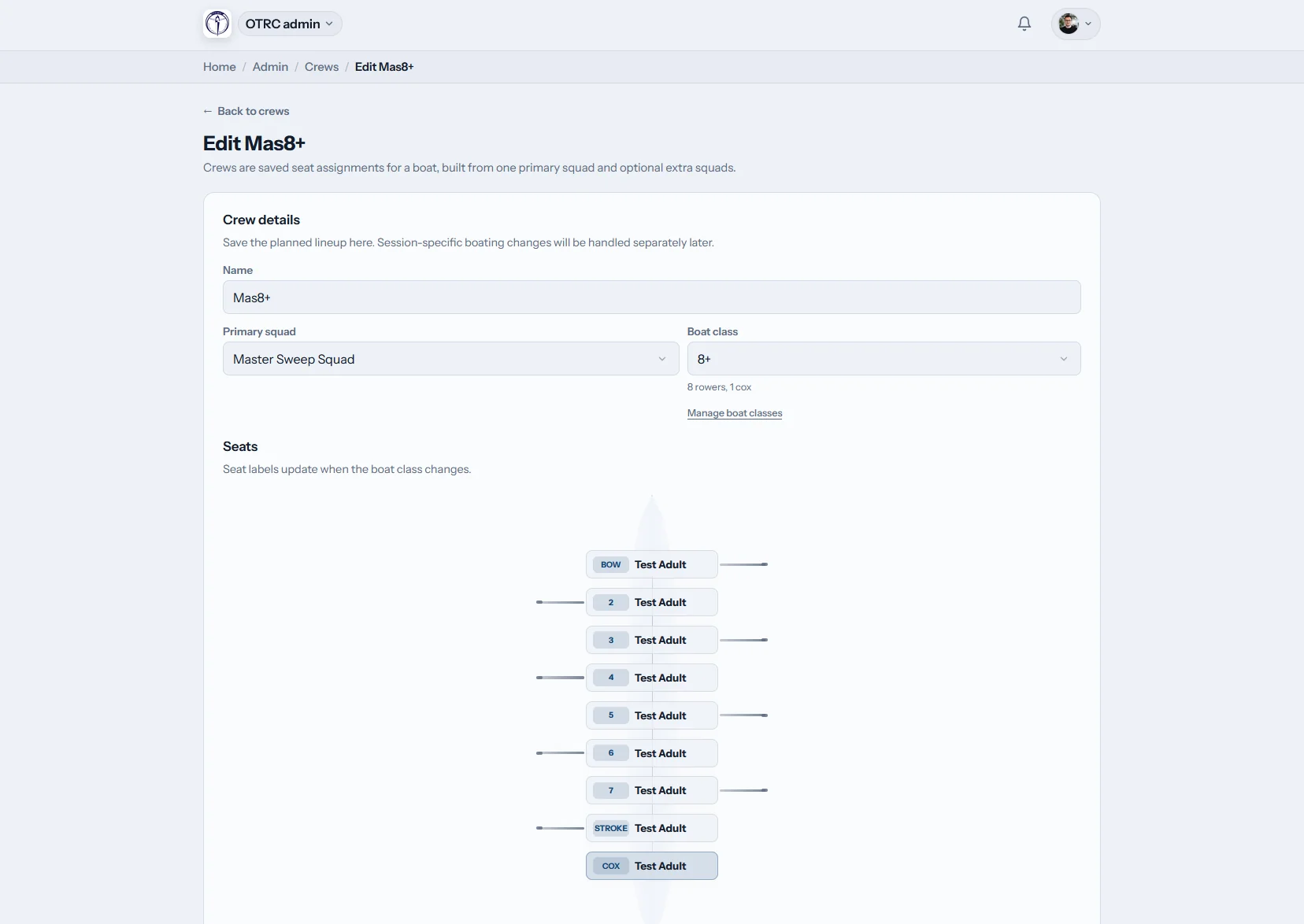
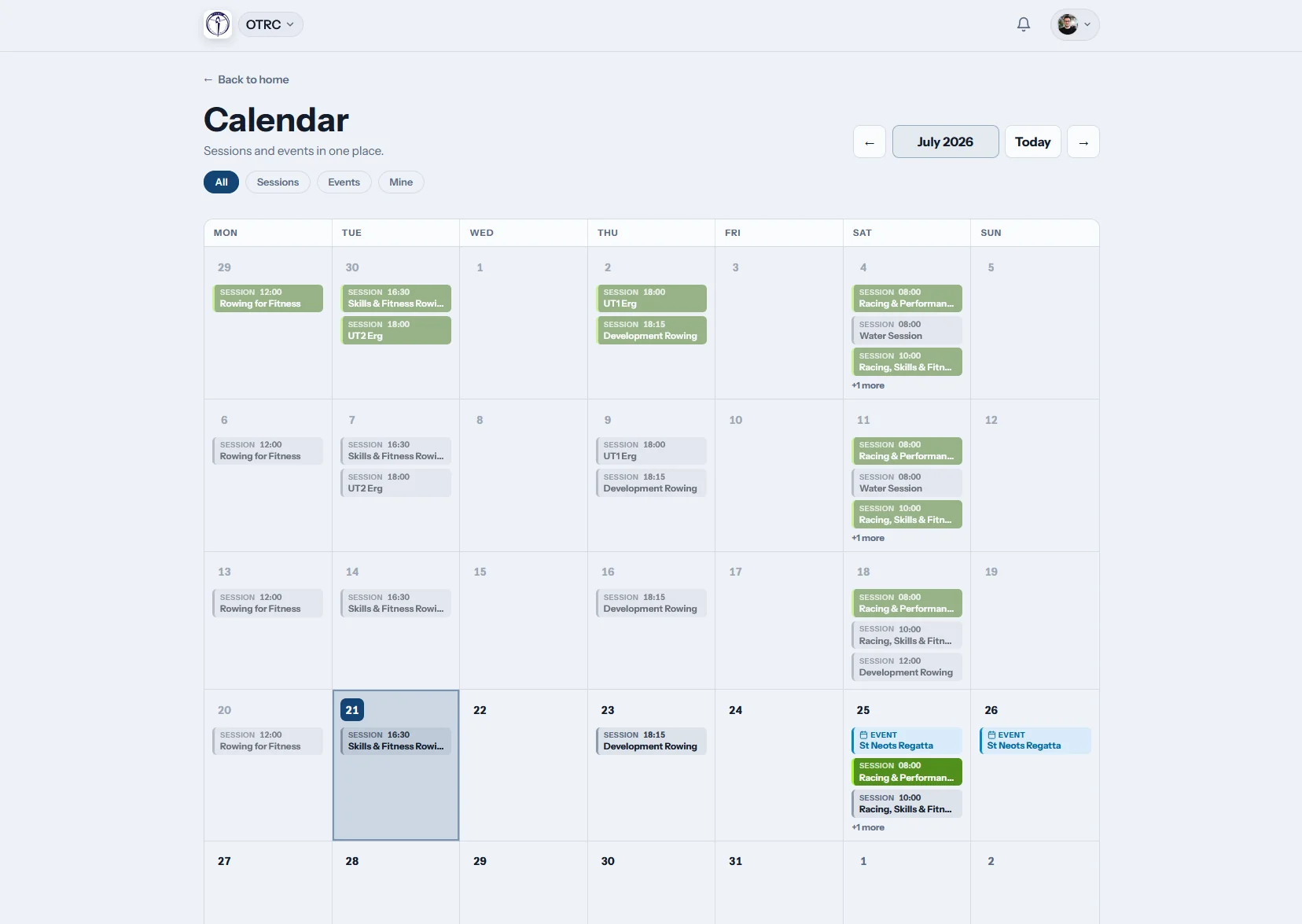
Select any screen to see it full size, with a note on what you are looking at.
Plan your move to RowHQ
RowHQ offers help moving member lists, boat records and history from Excel or Google Sheets. Its team also helps map CSV files from another system. Ask which parts of your club records can move before sending a file.
Read RowHQ's import answers. These are published product details, not a test of your files.
What you may use now
- The shared shell spreadsheet
- The shed sign-out book
- WhatsApp crew change messages
- Treasurer-chased bank transfers
- A neglected separate website
List who keeps each record and where the latest copy lives.
-
Pick one job to start with
We suggest starting with one task the committee can check. List the records it needs and agree who will check them. Keep a safe copy of the original files.
-
Agree a small test first
Ask which fields can move and how to share them safely. Agree a test space where real members will not get messages or charges.
-
Check people, not just totals
Review a few records with the person who knows the list. Two members can share an email address. A matching row count does not prove the details are right.
-
Choose which record to update
Once the test passes, agree where new changes will go. Avoid editing two live lists with no end point. Check what you can export later, in which format and at what cost.
Ask about your club's move. Describe the files first. Do not send member data with your enquiry.
Already running a real club
Oundle Town Rowing Club has run on RowHQ since 2025. A community club founded in 1872, it replaced a booking spreadsheet, WhatsApp polls and email chains with one system.
- 120+
- Active members
- 15
- Boats in the fleet
- 6
- Sessions a week
- 1872
- Club founded
Results published by RowHQ
- 10+ to under 1
- Weekly admin hours after six months
- 60% to 100%
- Attendance response rate
- Two weeks
- Until all 120 members had moved across
RowHQ publishes these figures in its Oundle case study. SportsHQ has not audited the club records. Source checked 11 September 2026.
Questions about rowing club management software
What is rowing club management software in Australia?
It is one place to manage shell bookings, complete crews, training, subs, equipment condition and safety records. A Rowing Australia club can replace the shed sign-out book, several spreadsheets and WhatsApp changes. Unlike a general booking calendar, the software records every seat and keeps the whole crew connected to the boat they plan to use.
What does RowHQ cost an Australian club?
Clubs with fewer than 21 active members pay nothing. The first paid band, for 21 to 30 members, is A$29 a month excluding GST. The top published band is A$239 monthly for 251 to 300 active members. Features do not change between bands, and the platform takes no transaction fee. Stripe sends card payments to the club's own account.
Can it record Working with Children Checks?
The member record can keep the safeguarding information your committee needs. Australia has no single national check. Each state or territory runs its own scheme, such as a Working with Children Check, blue card or Ochre Card. Clubs remain responsible for the local rules, while RowHQ gives officers one place to record the information they rely on.
Does RowHQ cope with a southern summer season?
Yes. Sessions, crews and race deadlines sit on the same calendar regardless of month. Australian rowing peaks through roughly October to March, so the club can organise the busy summer period without adapting a northern season template. Changes to attendance, water status and lineups remain visible to members as the programme moves.
What happens when a rower pulls out that morning?
The coach changes the affected seat and leaves the rest of the lineup intact. Members see the latest crew rather than searching a WhatsApp thread for the final version. Because the booking covers the whole crew, the replacement is reflected against the correct shell and outing immediately.
Can a rowing club get funding help with the cost?
Many Australian clubs cover costs like this through the Sporting Club Grants Program, a Local Sport Grant Program or tax deductible giving via the Australian Sports Foundation. The free band under 21 active members costs nothing at all, and annual billing runs at ten months, which keeps any grant application small.
Rather ask a person first?
Not everyone wants to sign up to find out whether something fits. Tell us how your club runs and we will tell you straight whether RowHQ suits you.
If it does not, we will say so.
The rest of the HQ family
One app per sport, sharing an engine underneath. Plenty of clubs run more than one.