RowHQ keeps American rowing clubs moving
RowHQ gives your board one place for boats, crews, training, dues, and club news. Members can check the river and their next session before driving to the boathouse. It replaces booking sheets, group texts, checks, and payment apps. The service is already live, and clubs with no more than 20 active members use it free.
- Free up to 20 active members
- Nothing to install
- One login for the whole club
See RowHQ in 96 seconds
Follow a member through sessions, card payments and training on their phone. See Concept2, the club globe, safety flags and cox grades using a sample club.
What is rowing club management software?
Rowing club management software brings the work around your boathouse into one system. It records shell availability, complete lineups, seat assignments, safety clearance, attendance, and dues. A regular membership database cannot show that nine people share an eight, or remove a damaged shell from booking. It also helps a USRowing club organize the fall head season and the spring and summer sprint season without splitting records among a spreadsheet, paper log, and group texts. Coaches, members, and board officers see the same current information.
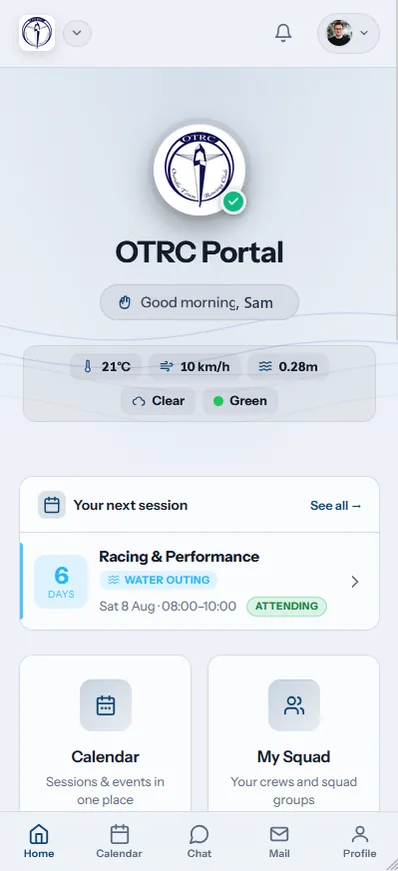
Saturday starts on one phone screen
The real RowHQ dashboard shows temperature, wind, river level, and the current flag first. Below that, a member sees the next session and their attendance. Club tools sit underneath. It is the information someone needs before leaving home, presented in a phone browser with the same login used by the board.
- Members see live river status before loading gear or driving across town for practice.
- The next session includes their attendance, so coaches know who is expected at the boathouse.
- Crews, dues, sessions, and club notices sit behind one account instead of separate tools.
RowHQ on a phone. Use it in any browser with nothing to install, or get the app:
What rowing asks for that generic club software does not do
Any club platform will hold your members and take your dues. These are the parts clubs end up running in a spreadsheet alongside it.
Reserve the shell for everyone aboard
An eight needs eight rowers and a cox. A room-booking calendar only attaches one name to the shell. RowHQ keeps the full lineup with the outing, so nobody reaches the parking lot believing a seat or boat is still available.
Change one seat without rebuilding the crew
Sweep side, sculling ability, and the cox all matter. The lineup is handled seat by seat because a late substitution changes more than attendance. Coaches can make the switch while preserving the rest of the boat.
Keep damaged gear out of circulation
Shells carry riggers, shoes, fins, and blades, plus the faults people report. When damage is logged, the boat must stop appearing as available. The next crew should not discover a cracked fin after carrying it outside.
Put river decisions where crews will see them
A changing river level, local navigation rule, closure, or flag can cancel the plan. One update needs to reach the whole squad before people set off. The water status belongs beside the session, not buried in another group text.
Show who has clearance to launch
Swim competence, capsize work, and steering permission affect which outings a member can join. The committee needs those records ready when asked. Keeping them on the member record also stops an avoidable scramble at the boathouse.
Work backward from racing deadlines
Fall heads and spring or summer sprints bring entry dates, declarations, and substitutions. Crews need those dates connected to training. Missing a required deadline ends the race plan, even when the boat is fit and the crew is ready.
The season in the United States
Head races run in the fall, and sprint racing runs in spring and summer.
USRowing compares the two to cross-country and track: the fall races are long, around 2.5 to 3 miles, and the spring and summer races are short.
That matters for the software because a season is not a calendar year. Memberships, dues and duty rosters all run on the club's season rather than on January to December, and a system built around the wrong one makes every renewal a manual job.
Dates checked against USRowing on 28 August 2026.
What RowHQ handles
The short version. RowHQ has its own site with the full detail, demos and pricing.
Shell reservations
View open shells and prevent clashes without using a paper sign-out log.
Seat-by-seat lineups
Move rowers between seats and update complete crews without another spreadsheet.
Practice attendance
Coaches check scheduled practices and attendance before anyone reaches the boathouse.
Regatta coordination
Manage regatta plans and entries within the same club system.
Member dashboard
Rowers find practices, lineups, and club updates through one account.
Committee reports
Give the committee current figures without asking volunteers for updates.
RowHQ, actually running
Screens from the live product, not a mockup. There are more of them, and a demo you can click through, on the RowHQ site.
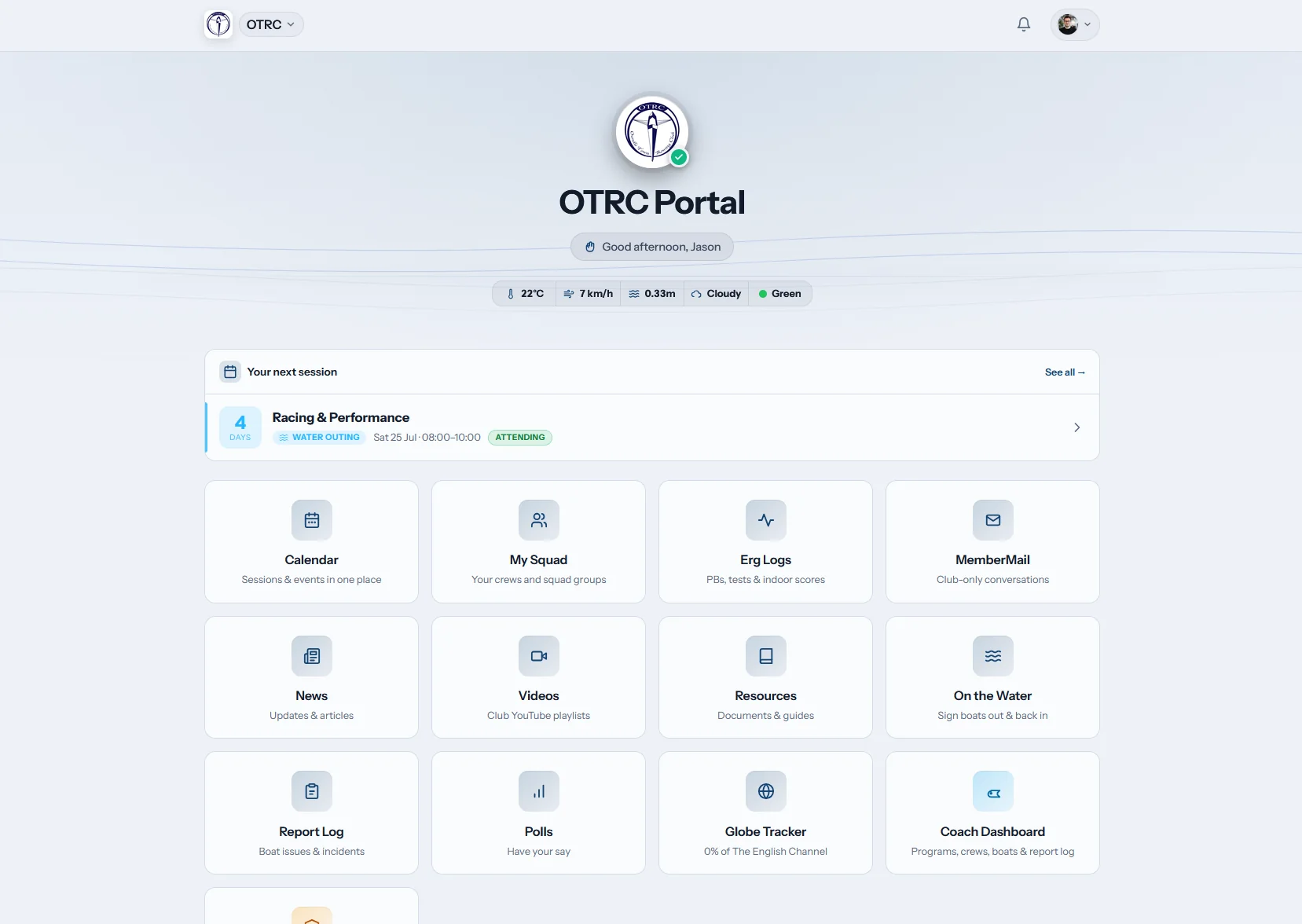
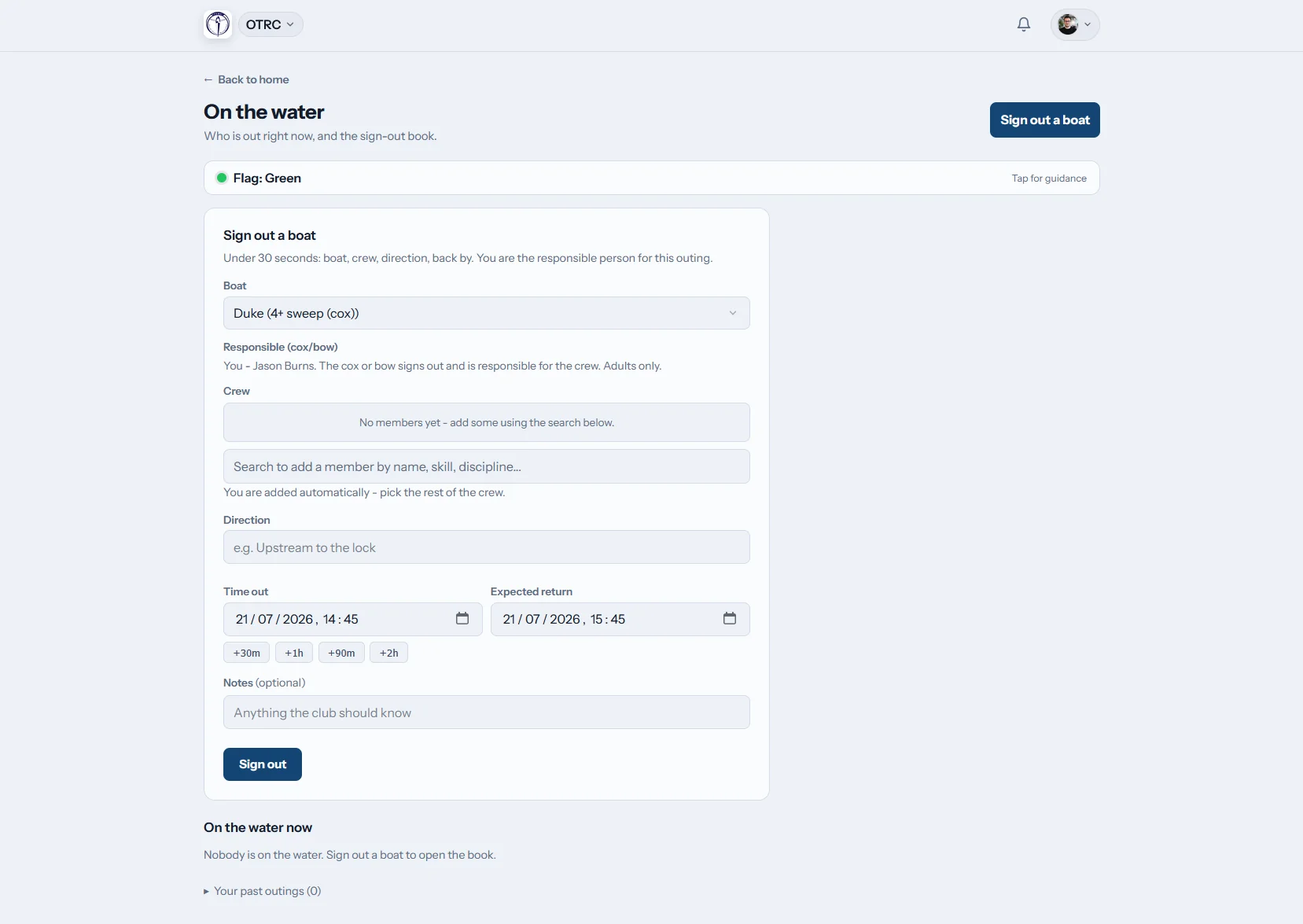
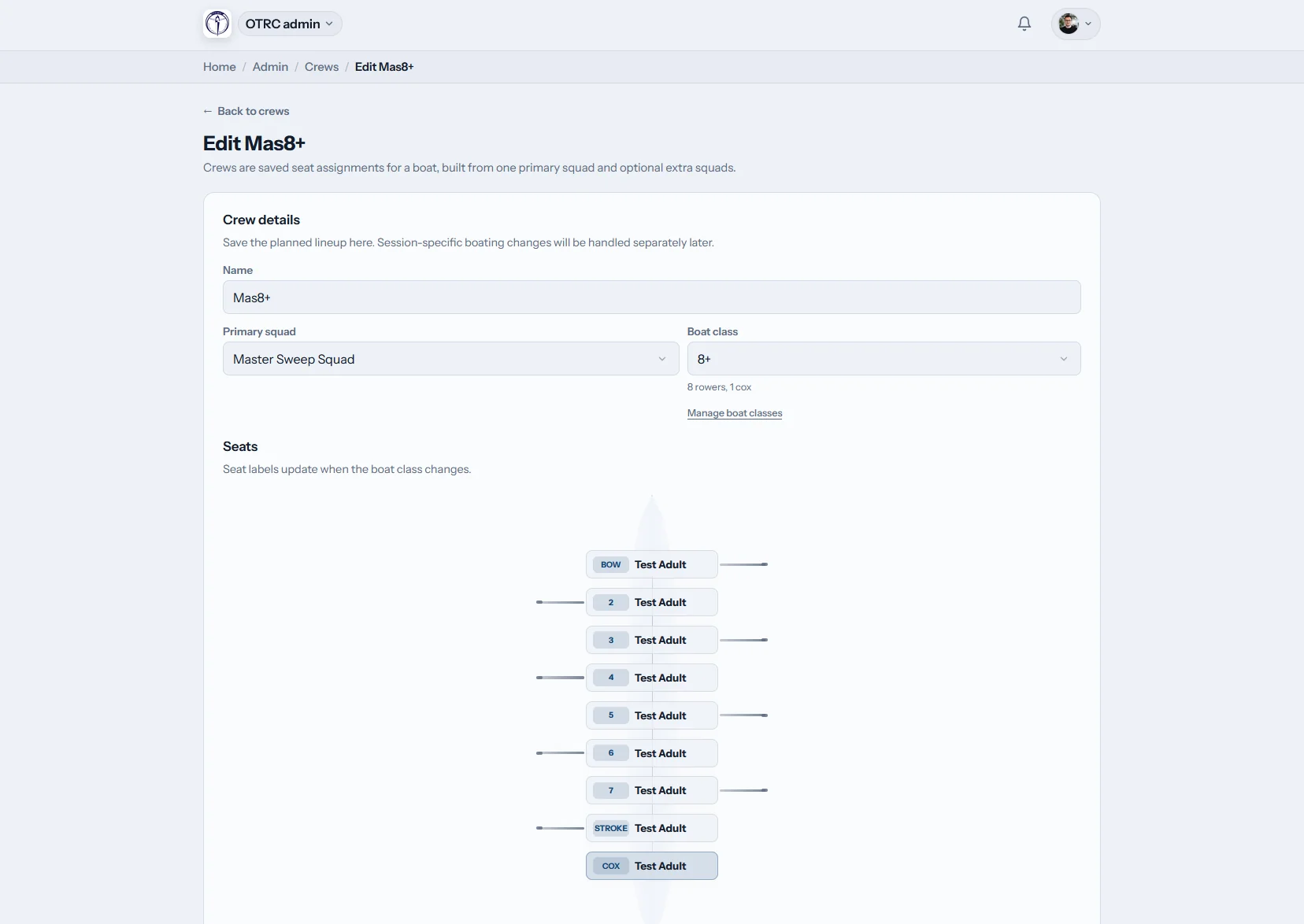
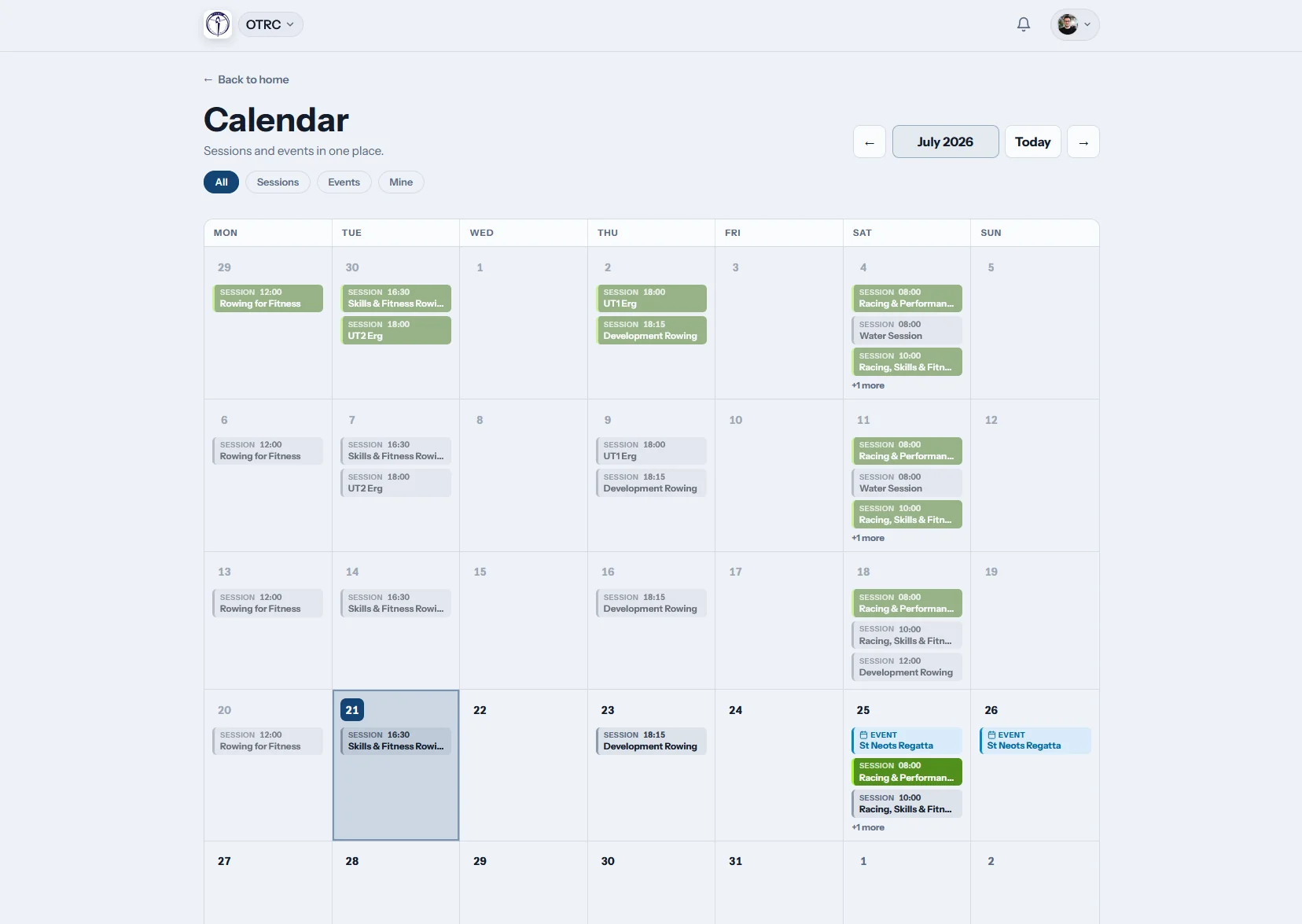
Select any screen to see it full size, with a note on what you are looking at.

Plan your move to RowHQ
RowHQ offers help moving member lists, boat records and history from Excel or Google Sheets. Its team also helps map CSV files from another system. Ask which parts of your club records can move before sending a file.
Read RowHQ's import answers. These are published product details, not a test of your files.
What you may use now
- The shared booking spreadsheet
- A paper boathouse sign-out log
- Group texts about substitutions
- Checks and separate payment apps
- An outdated standalone club website
List who keeps each record and where the latest copy lives.
-
Pick one job to start with
We suggest starting with one task the committee can check. List the records it needs and agree who will check them. Keep a safe copy of the original files.
-
Agree a small test first
Ask which fields can move and how to share them safely. Agree a test space where real members will not get messages or charges.
-
Check people, not just totals
Review a few records with the person who knows the list. Two members can share an email address. A matching row count does not prove the details are right.
-
Choose which record to update
Once the test passes, agree where new changes will go. Avoid editing two live lists with no end point. Check what you can export later, in which format and at what cost.
Ask about your club's move. Describe the files first. Do not send member data with your enquiry.
Already running a real club
Oundle Town Rowing Club has run on RowHQ since 2025. A community club founded in 1872, it replaced a booking spreadsheet, WhatsApp polls and email chains with one system.
- 120+
- Active members
- 15
- Boats in the fleet
- 6
- Sessions a week
- 1872
- Club founded
Results published by RowHQ
- 10+ to under 1
- Weekly admin hours after six months
- 60% to 100%
- Attendance response rate
- Two weeks
- Until all 120 members had moved across
RowHQ publishes these figures in its Oundle case study. SportsHQ has not audited the club records. Source checked 11 September 2026.
Questions about rowing club management software
What is rowing club management software in the United States?
It is one system for shell bookings, full crew lineups, seat changes, training, member records, dues, and safety clearance. For a USRowing club, it replaces the booking spreadsheet, paper boathouse log, and group texts. The important difference from general club software is that it understands a shell belongs to a whole crew, not one person.
How much does RowHQ cost for a US club?
RowHQ is free below 21 active members. The 21 to 30 member band is $21 per month, excluding sales tax. Published bands rise to $160 monthly for 251 to 300 active members. Every band includes every feature. The platform takes no transaction fee, and card payments go through Stripe into the club's own Stripe account.
Can it hold SafeSport and background check records?
The member record can hold the safety information that decides who may take part. USRowing requires relevant adults to complete SafeSport training, with annual refreshers, and requires referees to renew background checks every two years. Clubs still follow USRowing and U.S. Center for SafeSport rules. RowHQ keeps the club's records together where officers can find them.
Can coaches change a lineup on practice morning?
Yes. A coach edits the boat seat by seat, so replacing one rower does not mean creating the whole crew again. Everyone affected sees the current lineup immediately. The shell booking remains attached to the complete group, which removes the uncertainty that follows a last-minute change in a text thread.
Will general membership software handle our rowing program?
It can usually store a roster and collect dues. It tends to stop where rowing begins. RowHQ handles shell condition, whole-crew reservations, individual seats, water status, and the safety records that decide who may steer or go afloat. Those are the jobs that otherwise remain in separate spreadsheets and paper logs.
Are there grants that would cover club software for a rowing club?
Often, yes. American clubs fund gear and running costs through programs like Good Sports, All Kids Play and Sports Matter, and an annual RowHQ subscription is a small line beside those asks. Clubs under 21 active members pay nothing anyway, and annual billing is charged at ten months, so the request stays modest.
Rather ask a person first?
Not everyone wants to sign up to find out whether something fits. Tell us how your club runs and we will tell you straight whether RowHQ suits you.
If it does not, we will say so.
The rest of the HQ family
One app per sport, sharing an engine underneath. Plenty of clubs run more than one.