Sports club management software
Built one sport at a time
Most club software was written for gyms and fitness chains, then sold to everyone else. We work the other way round. Each app is built for a single sport, so it already knows what a duty roster is, what a crew lineup is, and why one double booking takes eight people off the water.
Most clubs run on nine things at once
None of them talk to each other, and all of them live in someone's head or someone's laptop. When that person steps down, the club loses the lot.
 Membership sheet
 WhatsApp group
 Committee inbox
 Shared drive
 Dropbox folder
 Club Facebook page
Every platform gets you eighty percent of the way
A general club platform will hold your members, take your money, show a calendar and send an email. That is the eighty percent every club on earth has in common, and most of them do it perfectly well.
It is the last twenty percent that decides whether anyone actually uses it. And the last twenty percent is your sport.
The first sixteen blocks are members, payments, a calendar and a mailing list. Here is what the last four look like, sport by sport.
- Complete crews attached to every shell booking
- Lineups adjusted one seat at a time
- Fault reports removing boats from use
- Current steering and capsize records
- Qualification rules built into every duty
- Race days grouped as a complete series
- Member craft recorded alongside club boats
- Weather decisions published to the club
- Boat and safety kit booked together
- Disciplines kept separate but connected
- Conditions recorded against the outing
- Member boats assigned to rack spaces
- Aircraft inspection recorded before flight
- A live queue instead of appointments
- Check flights prompted by currency
- Winch and aerotow billing kept separate
Examples, not a feature list. Every sport has its own version, and it is always the part that gets worked around.
What happens to the twenty percent
It does not disappear because the software cannot do it. It goes somewhere worse, and it usually goes there in this order.
-
It goes back in a spreadsheet
Somebody builds the crew sheet, the duty grid or the launch log alongside the platform, because the job still has to get done. The club is now running two systems and paying for one of them.
-
It moves into somebody's head
The spreadsheet has rules nobody wrote down. Who can take which duty. Which boat the juniors are not allowed in. It works, right up until that person stands down and takes it with them.
-
People stop trusting the system
Once the important half lives elsewhere, the platform becomes the place you go to pay. Members stop looking at it, the committee stops updating it, and in two years somebody proposes replacing it.
None of that is a criticism of the products. A platform built to serve every club in the country cannot also know that a coxed four needs five people or that a winch launch bills differently from an aerotow. It is being asked to do something impossible. So we stopped asking.
Why one app per sport
The words are already right
No renaming a generic "resource" to mean a boat, or a "class" to mean an outing. Your committee opens the software and sees the language it already uses.
The awkward parts are handled
Qualification gates on duties. Seat by seat crew changes. Aircraft that need a daily inspection before they fly. The things a general platform asks you to work around.
Nobody pays for the rest
A rowing club is not charged for the league standings and match schedules it will never open. Smaller software, used properly, beats a big platform used at ten percent.
What a committee gets
The same set of jobs turns up in every club, whatever the sport. These are handled in every HQ app, then shaped around how your sport actually runs.
One member record
Joining, renewals, emergency contacts, qualifications and roles held in one place instead of four spreadsheets.
Bookings that hold up
Kit and sessions booked with the clashes caught before they happen, not on the day.
Rosters people accept
Duties assigned fairly, with swaps members can arrange themselves and reminders that go out on their own.
Subs that collect themselves
Membership fees and event entries taken online, with the chasing done by the system.
Messages that land
A note to one squad rather than a broadcast the whole club learns to ignore.
Numbers for the committee
Membership, attendance and income ready before the meeting instead of the night before it.
Already running a real club
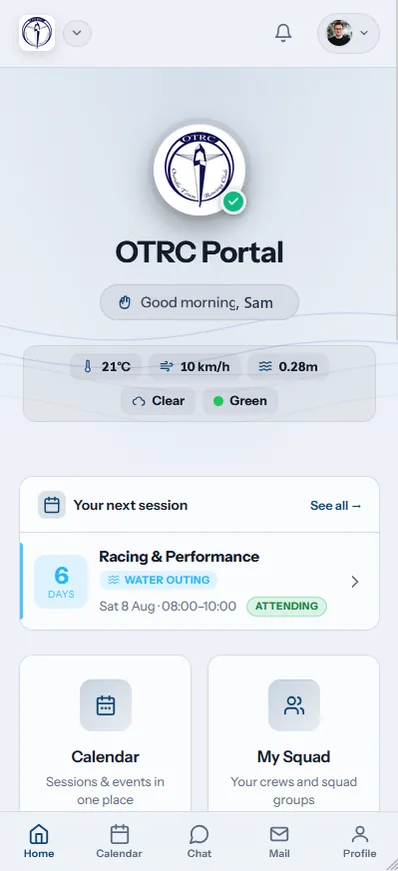
Oundle Town Rowing Club has run on RowHQ since 2025. A community club founded in 1872, it replaced a booking spreadsheet, WhatsApp polls and email chains with one system.
- 120+
- Active members
- 15
- Boats in the fleet
- 6
- Sessions a week
- 1872
- Club founded
Results published by RowHQ
- 10+ to under 1
- Weekly admin hours after six months
- 60% to 100%
- Attendance response rate
- Two weeks
- Until all 120 members had moved across
RowHQ publishes these figures in its Oundle case study. SportsHQ has not audited the club records. Source checked 11 September 2026.
The sports we cover
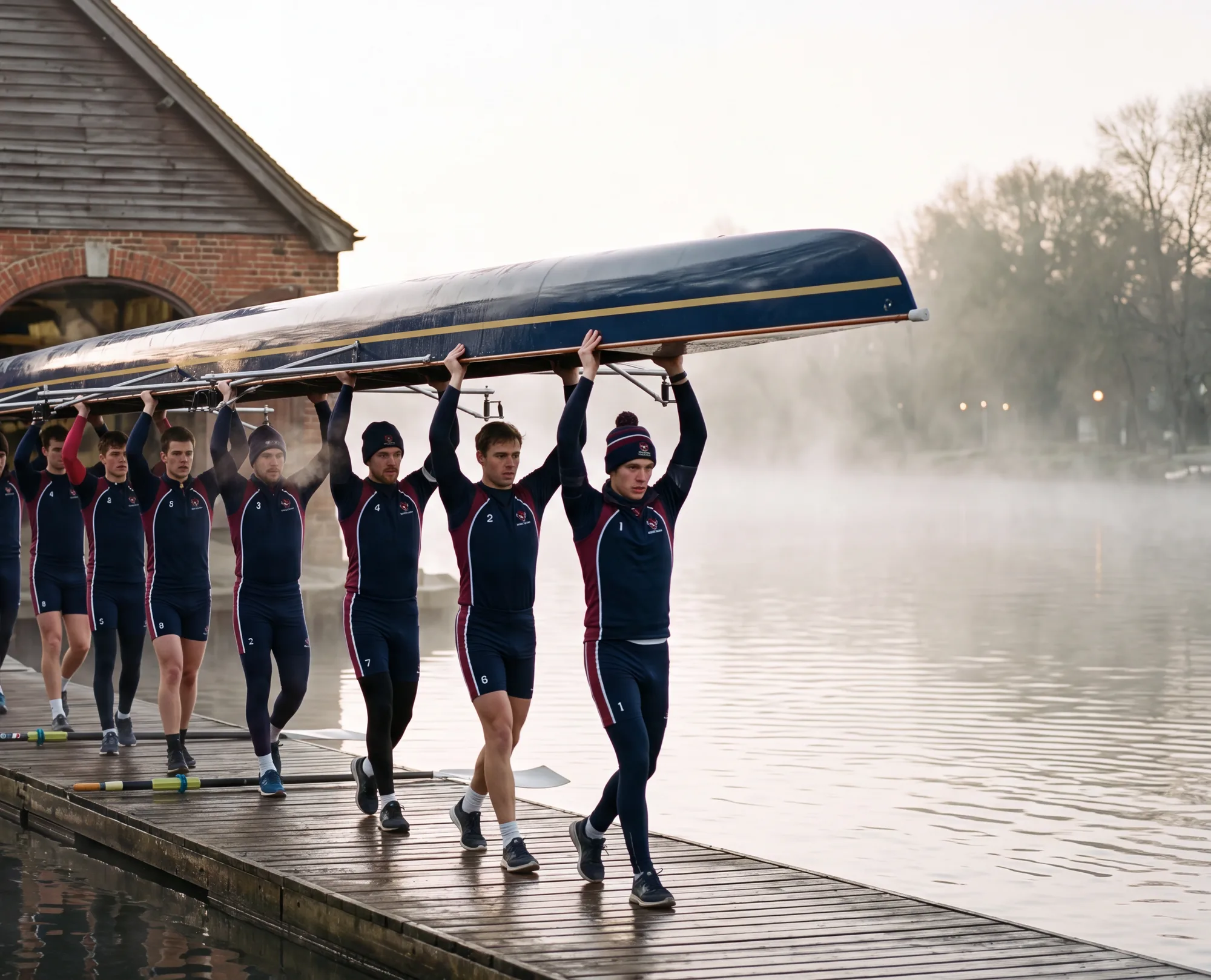
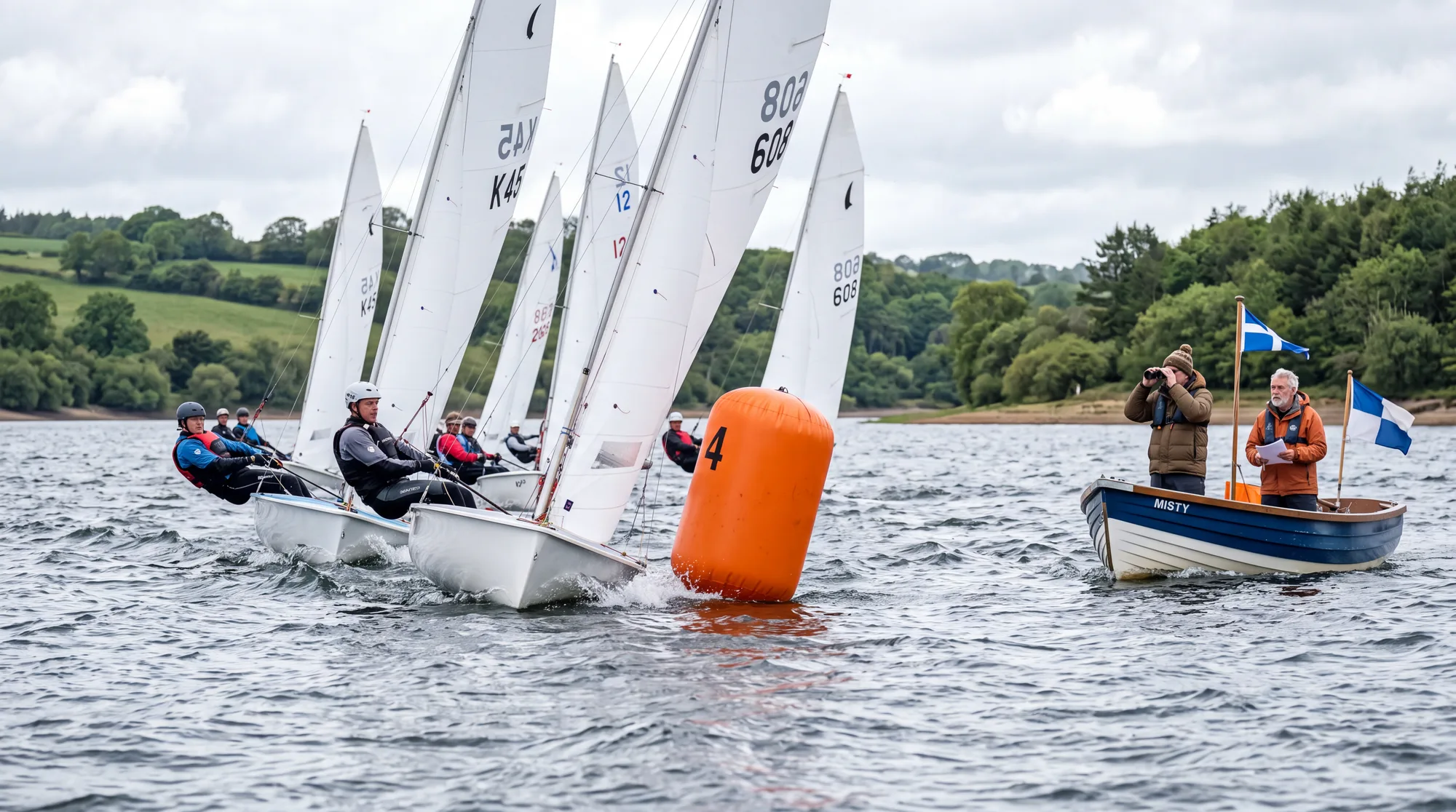
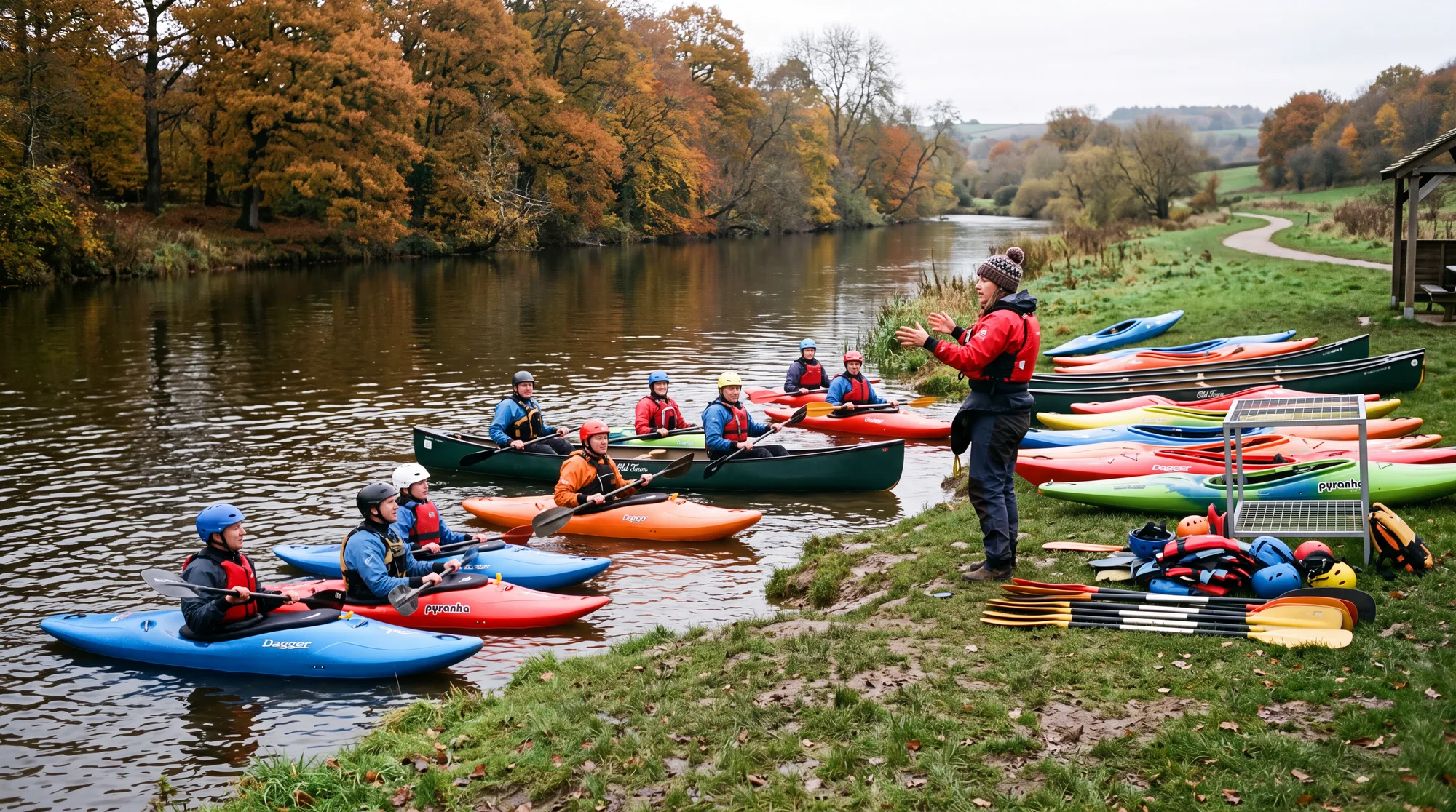
Four so far. Each one is its own app with its own name, and each one started with a real club that had run out of patience with spreadsheets.

Still working out what you need
If you are earlier than that and still deciding what to look for, our guide to club management software covers the four ways these systems charge you and the questions worth asking before you commit.
If the part you actually need fixing is the member list, start with membership management software, which is where most clubs feel the pain first.
Questions committees ask
Which sports do you cover?
Rowing, sailing, canoe and kayak are live now as RowHQ, SailHQ and KanuHQ. Gliding is in build as GlideHQ. If your sport is not one of those, we build it.
What if our sport is not on the list?
That is how all four of the current apps started. A club tells us how it runs, we build the HQ for that sport, and the founding club shapes the first version.
Do members have to install an app?
No. Every HQ works in a normal phone browser, on iPhone and on Android, with nothing to download. Native apps for the App Store and Google Play are in build, and the same login will carry over.
How is this different from general club software?
General platforms are built once and sold to every sport, so you rename things to fit and work around rules the software does not know about. We build a separate app per sport, so the vocabulary and the rules are right from the first login.
Who is behind it?
People who are in clubs and write software. Every app in the family was built because a club we are part of had the same problem you do.
Running a club in Australia
The software is the same everywhere. The paperwork is not. These are the parts that change because your club is in Australia, checked against the official sources linked below.
The background check
A Working with Children Check
There is no national check. Every state and territory runs its own, under its own name, with its own rules. A club near a border, or one that takes members to an interstate regatta, can end up dealing with two schemes at once.
The legal shape
An incorporated association
An incorporated association is the most common structure for a community club, and it is incorporated under state or territory law rather than nationally. It makes the club a legal entity separate from its members. Larger bodies sometimes use a company limited by guarantee instead.
The season
The season runs through the southern summer, so the peak is between roughly October and March.
This is the opposite way round to Britain and North America. The Australian Rowing Championships were held in late March in 2026 and are scheduled for mid March in 2027, and Australian Sailing runs a split-year season labelled across two years for that reason.
When money is the blocker: clubs in Australia apply to schemes such as Sporting Club Grants Program, Local Sport Grant Program, Australian Sports Foundation. The grants guide walks through each one.
Your sport is not on the list yet
That is how all four of these started. Tell us how your club runs and we will build the HQ for your sport, with your club shaping the first version.
We build custom club software