A summer roster your club can trust
SailHQ takes the pressure off the few volunteers carrying the sailing programme. Duty roles, qualifications, race series, boats, subs and club messages sit together. Members can swap appropriate duties without a trail of emails. Ask the team about availability and a quote for your Australian club.
- Pricing confirmed for your club
- Nothing to install
- One login for the whole club

What is sailing club management software?
Sailing club management software brings the club's racing work and member administration onto one current record. It builds duty rosters, limits safety jobs to qualified people, schedules a race series, records member boats, and handles subs. For an Australian Sailing club, it needs to follow a southern summer programme and make weather changes easy to publish. A normal membership package may collect money, but it does not necessarily understand why a missing safety boat crew can close the course or why three abandoned days affect one series.
The duty problems in one view
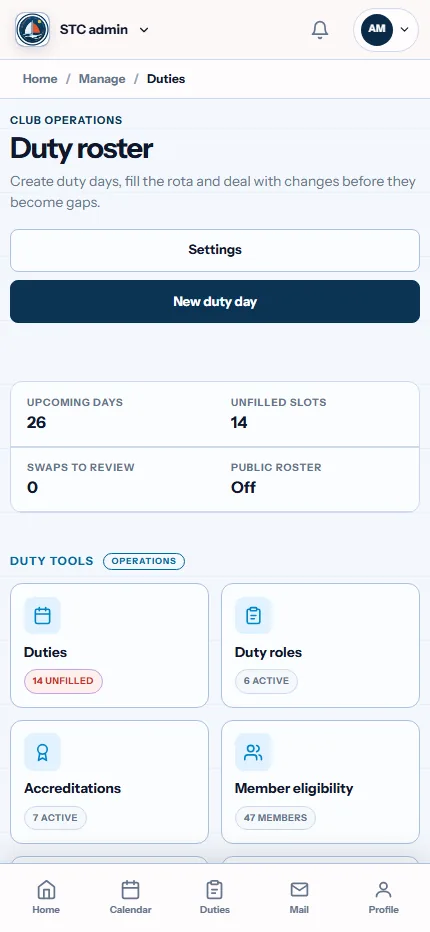
On the real SailHQ phone screen, the sailing secretary sees 26 future duty days and 14 unfilled positions. Swap reviews and roster tools sit underneath. That makes the unfinished work obvious during the southern summer. The view is built to answer which gaps need chasing, not simply display a month of dates.
- Unfilled positions are counted beside upcoming duty days, making the next weak roster easy to find.
- Requests to swap are handled inside the same screen as the assignments they will change.
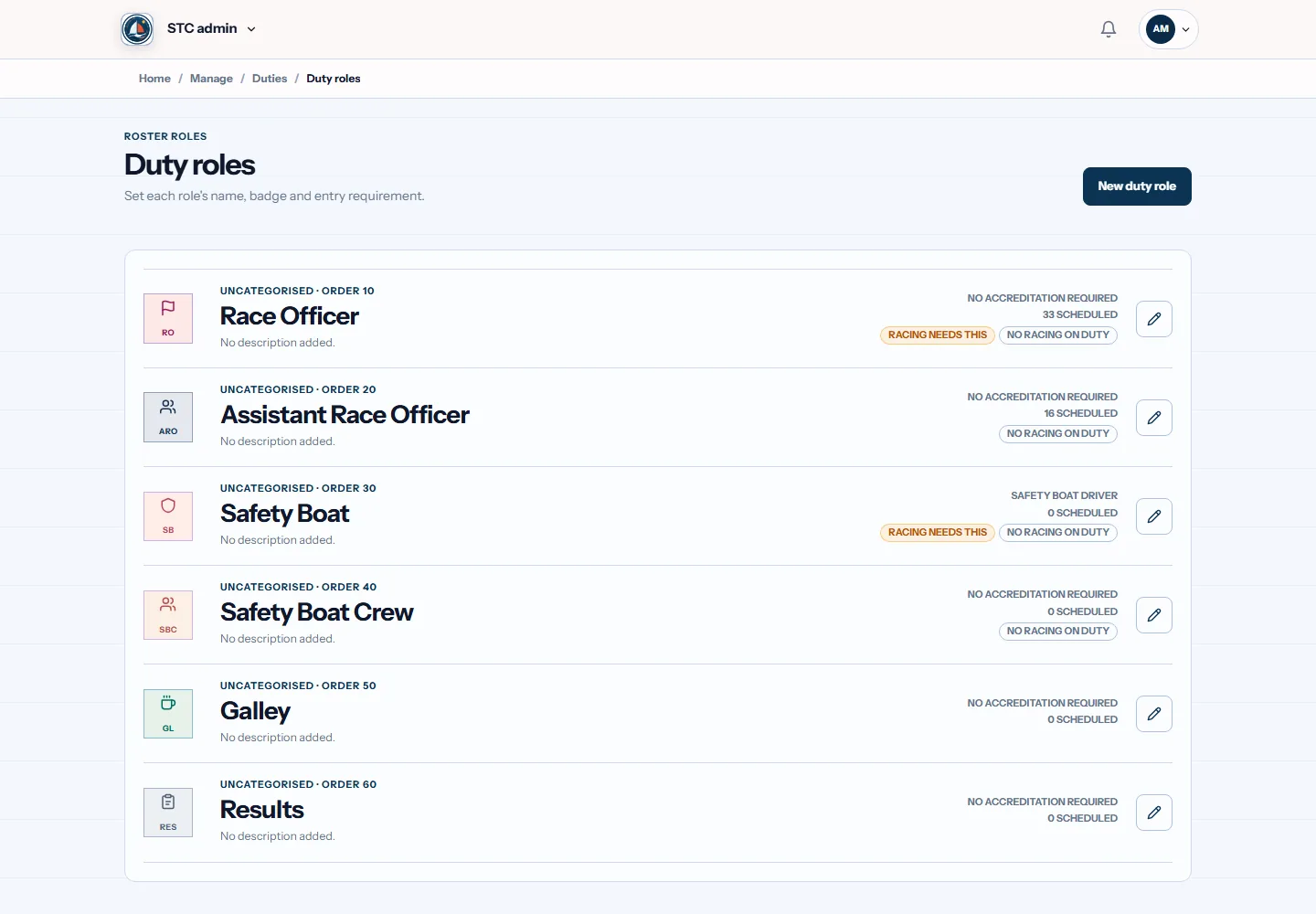
- Role requirements stop a member without the right qualification from volunteering for safety cover.
SailHQ on a phone. Nothing to install.
What sailing asks for that generic club software does not do
Any club platform will hold your members and take your subs. These are the parts clubs end up running in a spreadsheet alongside it.
The roster keeps the clubhouse running
Racing relies on a race officer and safety crew, while the galley and bar need volunteers too. Empty positions are operational gaps. Showing them well ahead gives the committee a fair chance to fill the summer roster.
Safety cover needs the right ticket
First aid, powerboat certificates and race officer training matter at the point of assignment. Each duty should carry its requirement. Members without the necessary qualification cannot take it, while those who qualify can volunteer without asking the secretary.
Keep abandoned races inside the series
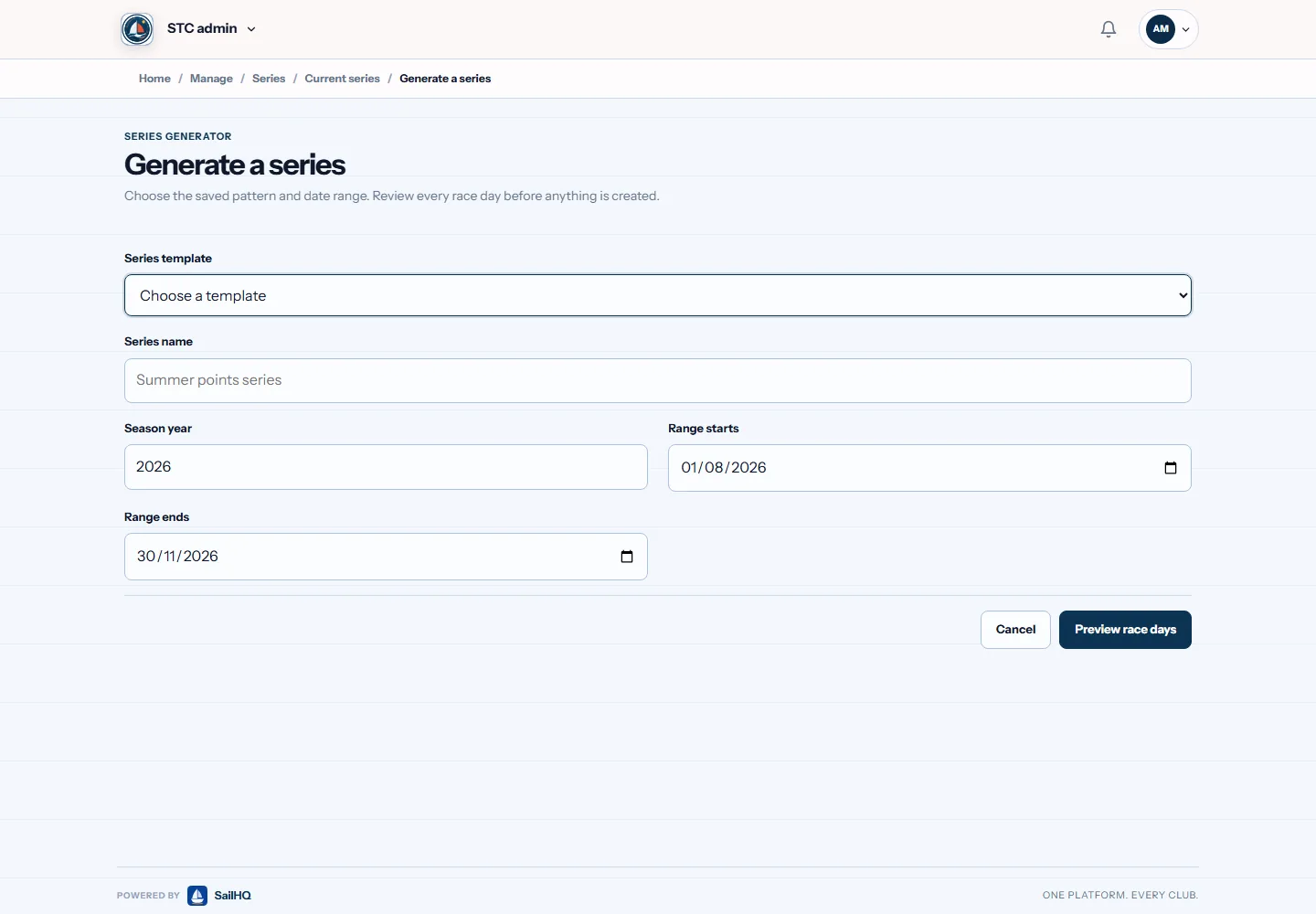
A series carries handicaps, discards and results across many race days. When summer weather removes a Sunday, the schedule needs to adjust without becoming disconnected events. That is where an ordinary calendar stops being useful.
List the member fleet properly
Sail numbers, class and handicap belong to privately owned boats as well as club craft. The club still needs to know what is afloat and who sails it. Ownership should not push that information into another spreadsheet.
Call off racing once
The weather can change the decision after people have started travelling. One notice must reach racers and duty crews quickly. A shared system gives everyone the final version instead of leaving several WhatsApp conversations open.
Keep routine swaps away from the secretary
Members cannot always make their allocated day. They should be able to exchange duties within the qualification rules. Once agreed, the roster changes for the whole club without another volunteer copying details between emails.
What SailHQ handles
The short version. SailHQ has its own site with the full detail, demos and pricing.
Qualified duty roster
Set role types, entry rules and points without chasing every volunteer.
Race season builder
Use series templates to schedule the complete season in minutes.
Boat register
List club and member boats with up-to-date availability together.
Member home
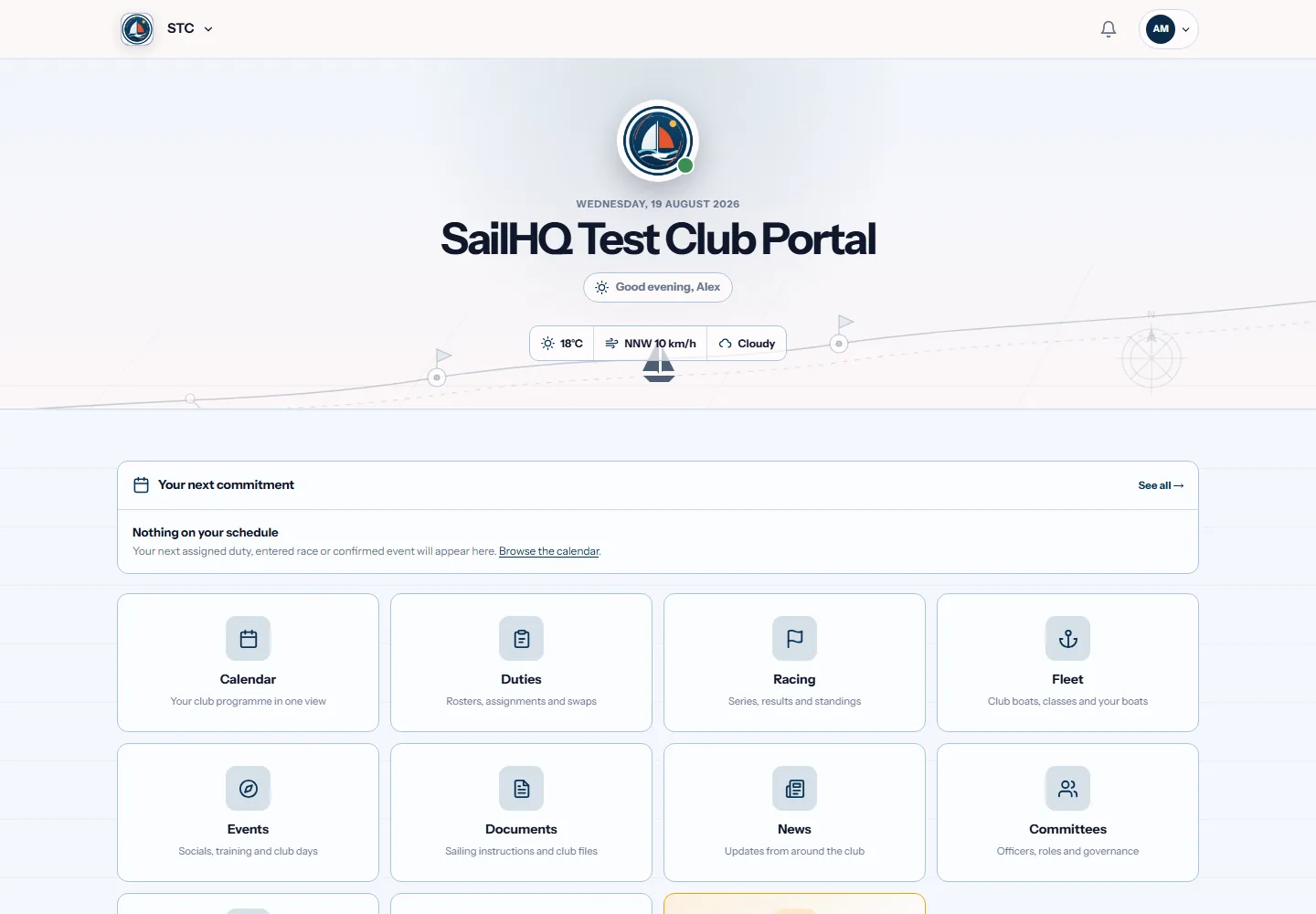
Members find their next duty, forecast and club notices after login.
Club weather
Pull wind and conditions straight from the club's own coordinates.
Season calendar
Put racing, training and social dates into one shared calendar.
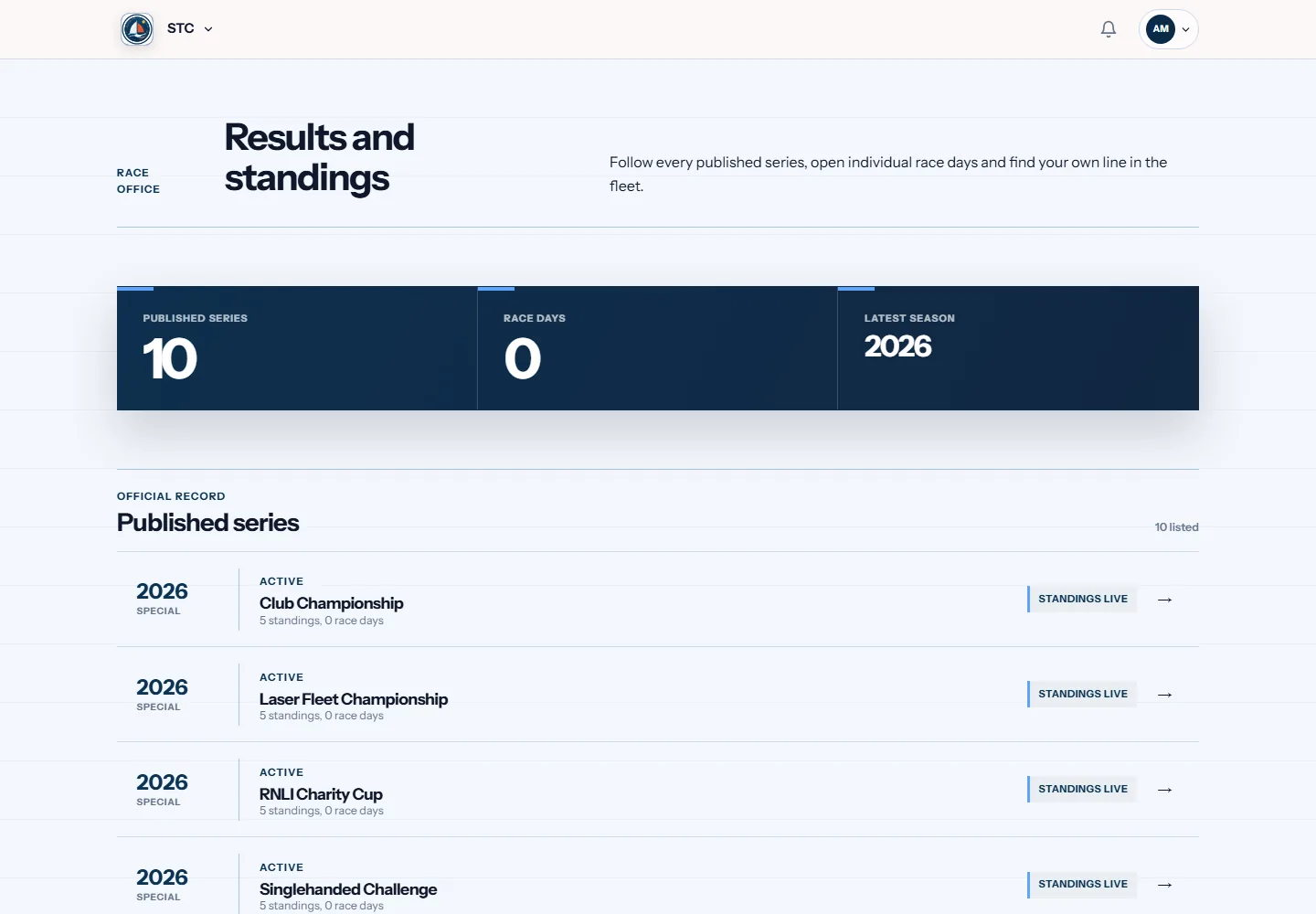

Plan your move to SailHQ
SailHQ describes a test import with help from its team. Your membership officer checks the result before members get invites. The club still decides which records are right when names or details do not match.
See SailHQ's move process. These are published product details, not a test of your files.
What you may use now
- A roster spreadsheet
- The clubhouse noticeboard calendar
- Chased bank transfer payments
- Secretary-managed email swaps
- Scoring files on one computer
List who keeps each record and where the latest copy lives.
-
Pick one job to start with
We suggest starting with one task the committee can check. List the records it needs and agree who will check them. Keep a safe copy of the original files.
-
Agree a small test first
Ask which fields can move and how to share them safely. Agree a test space where real members will not get messages or charges.
-
Check people, not just totals
Review a few records with the person who knows the list. Two members can share an email address. A matching row count does not prove the details are right.
-
Choose which record to update
Once the test passes, agree where new changes will go. Avoid editing two live lists with no end point. Check what you can export later, in which format and at what cost.
Ask about your club's move. Describe the files first. Do not send member data with your enquiry.
Who is behind SailHQ
There is no published sailing case study yet, and we are not going to invent one. What we can point at is the engine underneath. RowHQ runs Oundle Town Rowing Club day to day, with real members, real money and real race entries going through it.
SailHQ is a different sport on the same foundation, built by the same people. It is live now, and early clubs get a direct line to the people writing it.
Questions about sailing club management software
What is sailing club management software in Australia?
It is one place for the duty roster, qualifications, race series, boat register, subs and member messages. An Australian Sailing club can replace the noticeboard calendar, roster sheet and email swap chains. The system understands that a race day needs qualified people in specific roles and that the summer schedule belongs to a connected series.
What does SailHQ cost in Australia?
SailHQ publishes indicative GBP pricing, not an Australian dollar band table. The calculator uses member count, optional extras and billing cycle. Ask for a written quote that confirms currency, GST treatment and the services your Australian club needs. RowHQ and KanuHQ free bands are separate offers.
Can we store Working with Children Check details?
Yes, relevant safeguarding information can be kept on the member record. Each Australian state and territory operates its own scheme and rules. Names include Working with Children Check, blue card, Registration to Work with Vulnerable People and Ochre Card. Your club applies the rules for its location, while SailHQ keeps the records committee members need to find.
Does SailHQ follow a southern summer programme?
Yes. Your club sets the season and series dates, so the roster and racing calendar can run roughly October to March. Abandoned days remain part of the same series rather than becoming stray events. Members see the relevant duties and changes regardless of how the season crosses two calendar years.
How do qualification gates work on duties?
The club attaches a requirement to each role. A safety boat job can require a powerboat ticket, while another duty remains open to everybody. SailHQ checks that rule when someone is assigned or volunteers. This keeps qualifications in the working roster instead of a folder nobody checks until race morning.
Can a sailing club get funding help with the cost?
Check the current rules of your state or local sport grant before including software in an application. Get a written SailHQ quote first, including any optional services. A funding body may distinguish a software subscription from equipment or participation costs.
Rather ask a person first?
Not everyone wants to sign up to find out whether something fits. Tell us how your club runs and we will tell you straight whether SailHQ suits you.
If it does not, we will say so.
The rest of the HQ family
One app per sport, sharing an engine underneath. Plenty of clubs run more than one.