Take the chasing out of summer duties
SailHQ organises duty days, suitable volunteers, race series, boats and subs for the southern summer. Members handle straightforward swaps inside the rules, while the secretary sees every gap from a phone. Ask the SailHQ team to confirm availability and pricing for your New Zealand club.
- Pricing confirmed for your club
- Nothing to install
- One login for the whole club

What is sailing club management software?
Sailing club management software keeps racing, duties and membership in one place. It builds a roster, checks qualifications, links races into series, records boats owned by members, collects subs, and sends weather changes. For a Yachting New Zealand club, the calendar must suit an October to March summer and stay usable when race days are lost. Ordinary member software deals with names and payments. It seldom understands that an unfilled duty can stop racing or that a straight swap still needs a qualified replacement.
Find the gaps before race day
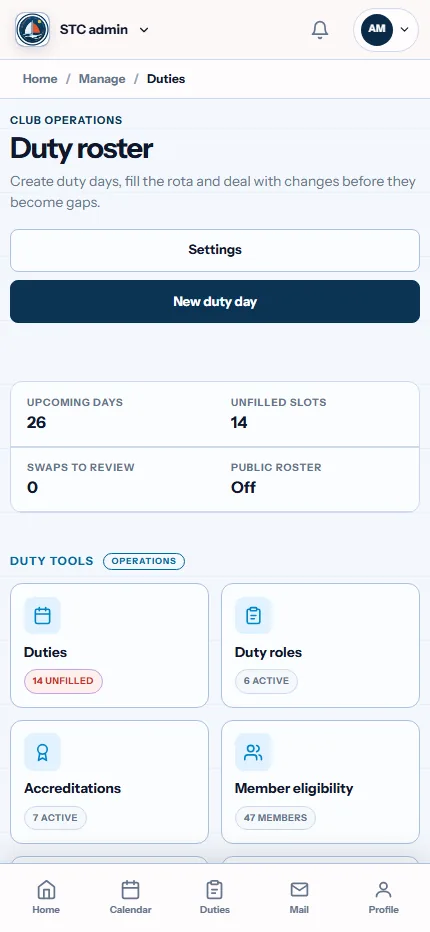
The real phone view shows 26 upcoming duty days and 14 slots still waiting for a volunteer. The secretary can also see swaps that need review and open the roster tools below. It turns a long summer roster into a short list of actions, with the unfinished roles visible before the Saturday night scramble.
- Open roles are counted across coming duty days, showing exactly where the summer programme needs help.
- Swap reviews stay connected to the assignments, rather than sitting in separate WhatsApp messages.
- The system checks role qualifications while members volunteer, protecting the safety positions on the roster.
SailHQ on a phone. Nothing to install.
What sailing asks for that generic club software does not do
Any club platform will hold your members and take your subs. These are the parts clubs end up running in a spreadsheet alongside it.
Build the season around volunteer cover
Race officers and safety crews make the racing possible. Galley and bar roles keep the club day running. Empty slots need to stand out early, before the same committee member ends up chasing everyone again.
Put the ticket on the role
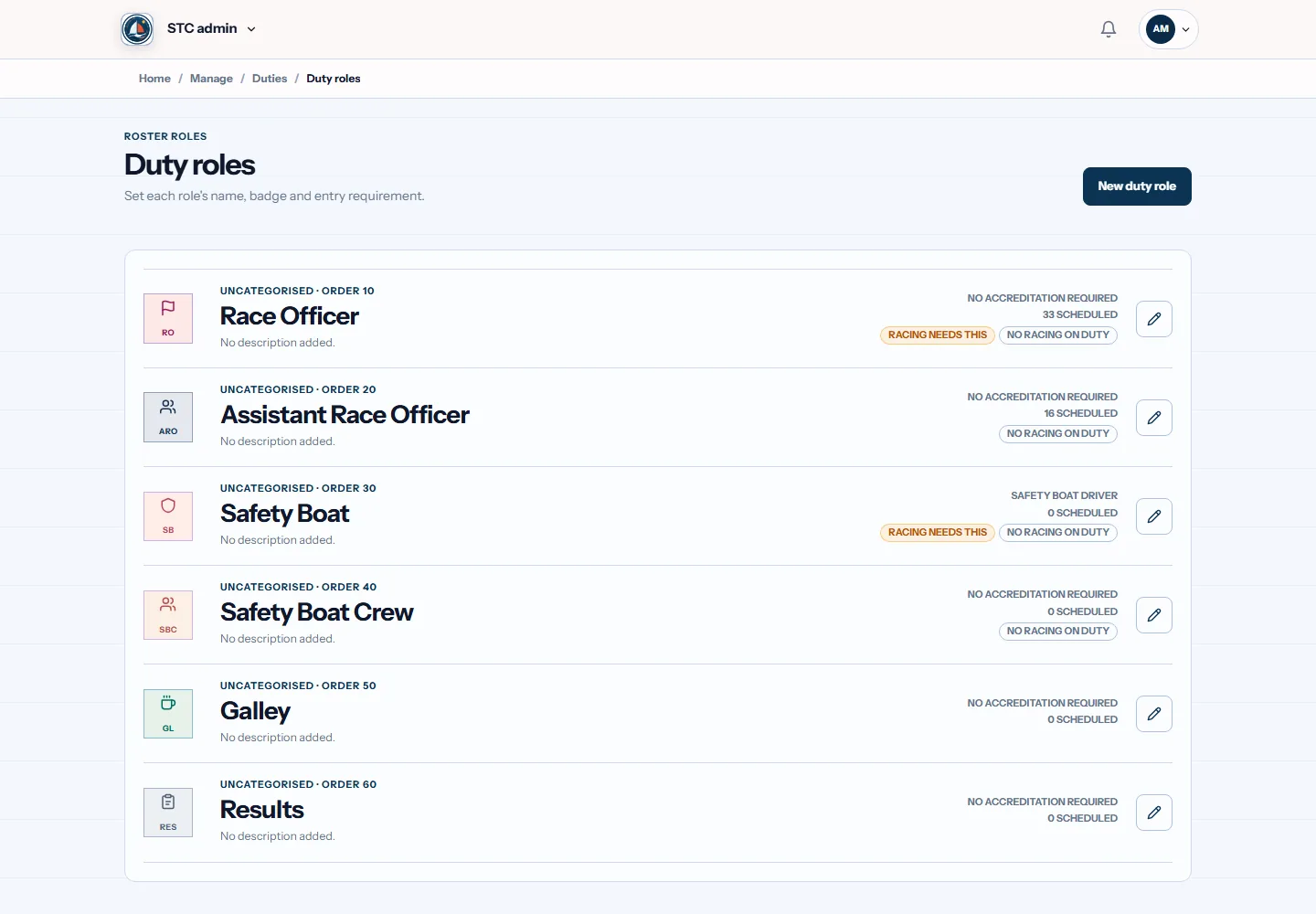
Powerboat certificates, first aid and race officer training should control who can take a duty. When the requirement lives inside the roster, an eligible member can help directly and an ineligible one cannot claim safety cover.
Keep the summer series connected
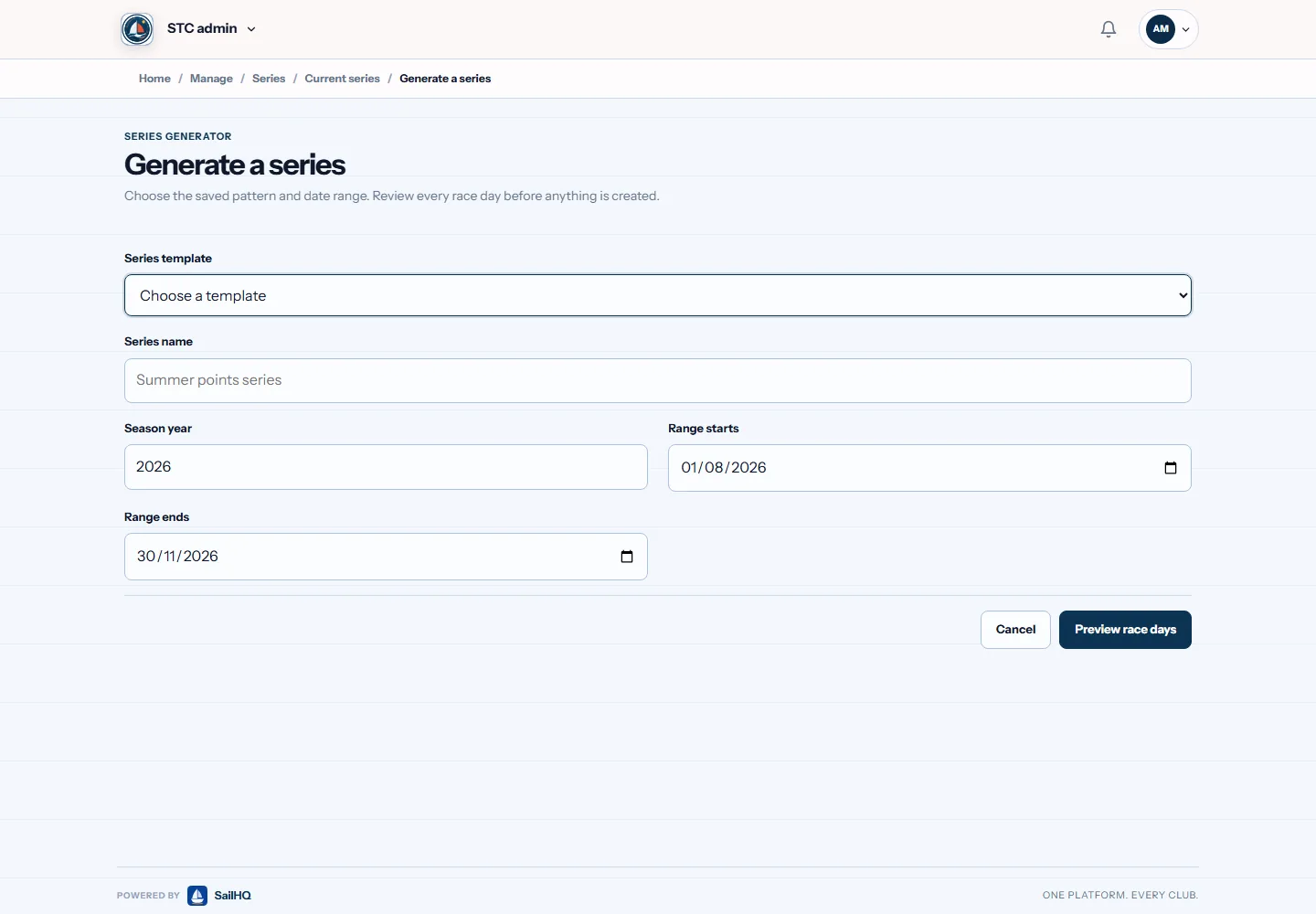
Handicaps, results and discards link many race days. Weather may remove some of them, but the season still needs one structure. SailHQ handles a series rather than leaving the club with unrelated events to reconcile.
Include privately owned boats
Members' boats carry classes, sail numbers and handicaps used by the club. They belong in the fleet register even though the club does not own them. Officers can then see what is afloat and who sails it.
Publish the final weather call
Racing can be abandoned after members have started their journey. One clear update should reach sailors and rostered volunteers. A live club notice removes the uncertainty caused by different messages arriving in different chats.
Let the roster handle straightforward exchanges
Members can trade duties when the replacement meets the role rule. SailHQ updates the assignment for both people. The sailing secretary sees the result without negotiating every ordinary change through a chain of emails.
What SailHQ handles
The short version. SailHQ has its own site with the full detail, demos and pricing.
Duty roster rules
Build role types, qualification checks and points into the volunteer roster.
Series templates
Schedule a whole summer season quickly using saved series templates.
Fleet register
Keep club and private boats with live availability in one list.
Member view
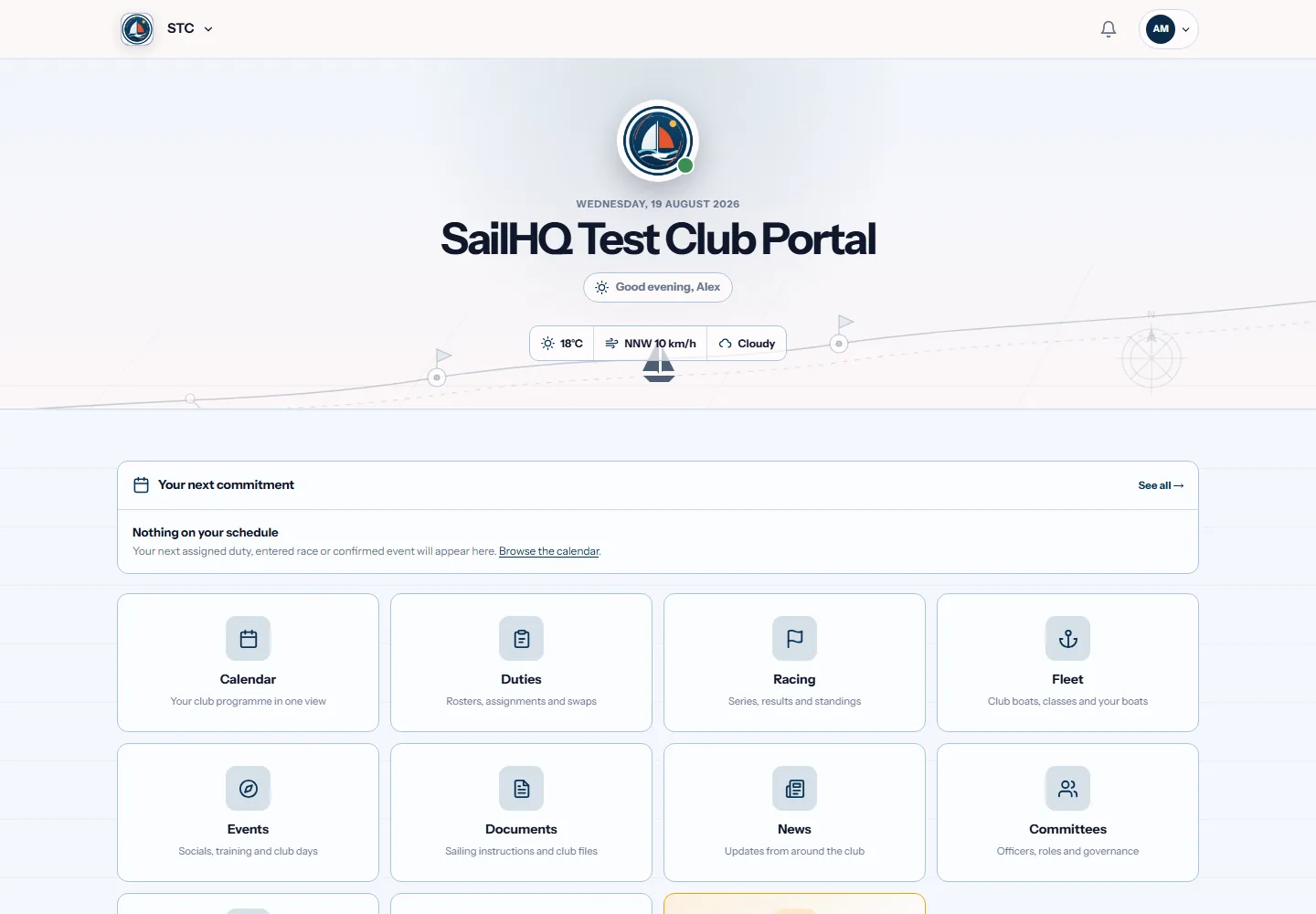
Members see the next duty, current weather and club notices on login.
Local weather
Bring wind and conditions directly from the club's chosen coordinates.
Programme calendar
Hold racing, training and social events together on one calendar.

Plan your move to SailHQ
SailHQ describes a test import with help from its team. Your membership officer checks the result before members get invites. The club still decides which records are right when names or details do not match.
See SailHQ's move process. These are published product details, not a test of your files.
What you may use now
- The shared duty sheet
- A noticeboard season calendar
- Bank transfer chasing
- WhatsApp duty exchanges
- Local-only scoring files
List who keeps each record and where the latest copy lives.
-
Pick one job to start with
We suggest starting with one task the committee can check. List the records it needs and agree who will check them. Keep a safe copy of the original files.
-
Agree a small test first
Ask which fields can move and how to share them safely. Agree a test space where real members will not get messages or charges.
-
Check people, not just totals
Review a few records with the person who knows the list. Two members can share an email address. A matching row count does not prove the details are right.
-
Choose which record to update
Once the test passes, agree where new changes will go. Avoid editing two live lists with no end point. Check what you can export later, in which format and at what cost.
Ask about your club's move. Describe the files first. Do not send member data with your enquiry.
Who is behind SailHQ
There is no published sailing case study yet, and we are not going to invent one. What we can point at is the engine underneath. RowHQ runs Oundle Town Rowing Club day to day, with real members, real money and real race entries going through it.
SailHQ is a different sport on the same foundation, built by the same people. It is live now, and early clubs get a direct line to the people writing it.
Questions about sailing club management software
What is sailing club management software in New Zealand?
It is one system for rosters, role qualifications, race series, fleet records, subs and club notices. A Yachting New Zealand club can replace its duty spreadsheet, noticeboard and swap messages. Sailing-specific software understands why safety cover requires the correct ticket and why the season is a set of connected series rather than isolated calendar entries.
How much is SailHQ for a New Zealand club?
The public SailHQ estimate is in GBP, not New Zealand dollars. Member count, optional extras and the billing cycle affect the calculator total. Ask the team to confirm the final quote, currency and GST treatment for your club. RowHQ's NZ dollar bands are a separate offer.
Can SailHQ hold police vetting information?
The club can keep relevant safeguarding records against a member. New Zealand Police vetting is requested by an approved organisation and informs the club's decision, but Police does not decide suitability. Vetting also contributes to the safety check for a children's worker. SailHQ stores the information your committee uses while the decision remains with the club.
Can our roster run from October to March?
Yes. The club controls its own season dates, including a southern summer that crosses the year end. Duties and race series remain linked throughout. When weather removes a day, the programme can be adjusted without turning the series into unrelated events or rebuilding a spreadsheet.
Will members be able to arrange their own duty swaps?
Yes. A member can exchange a duty with someone who meets the same qualification requirement. The live roster then reflects the agreed change. The secretary does not need to relay each message, and the club does not lose the safety check while making swaps easier.
What if a sailing club cannot stretch to the subscription?
Get a confirmed SailHQ quote before deciding what the club can afford. If you seek funding from a regional sport body or gaming trust, check whether its current rules cover software subscriptions. Include any optional services in the amount you ask for.
Rather ask a person first?
Not everyone wants to sign up to find out whether something fits. Tell us how your club runs and we will tell you straight whether SailHQ suits you.
If it does not, we will say so.
The rest of the HQ family
One app per sport, sharing an engine underneath. Plenty of clubs run more than one.