GlideHQ is being built for soaring clubs
GlideHQ will connect the flight list, aircraft status, instructor and tow duties, launches, member accounts, and training records. It is still in build and has not launched. American clubs can register interest for early access and help decide what comes first. The goal is to replace whiteboards, paper flight logs, and monthly billing spreadsheets.
- Register interest free
- Founding clubs shape the first version
- No commitment
What is gliding club management software?
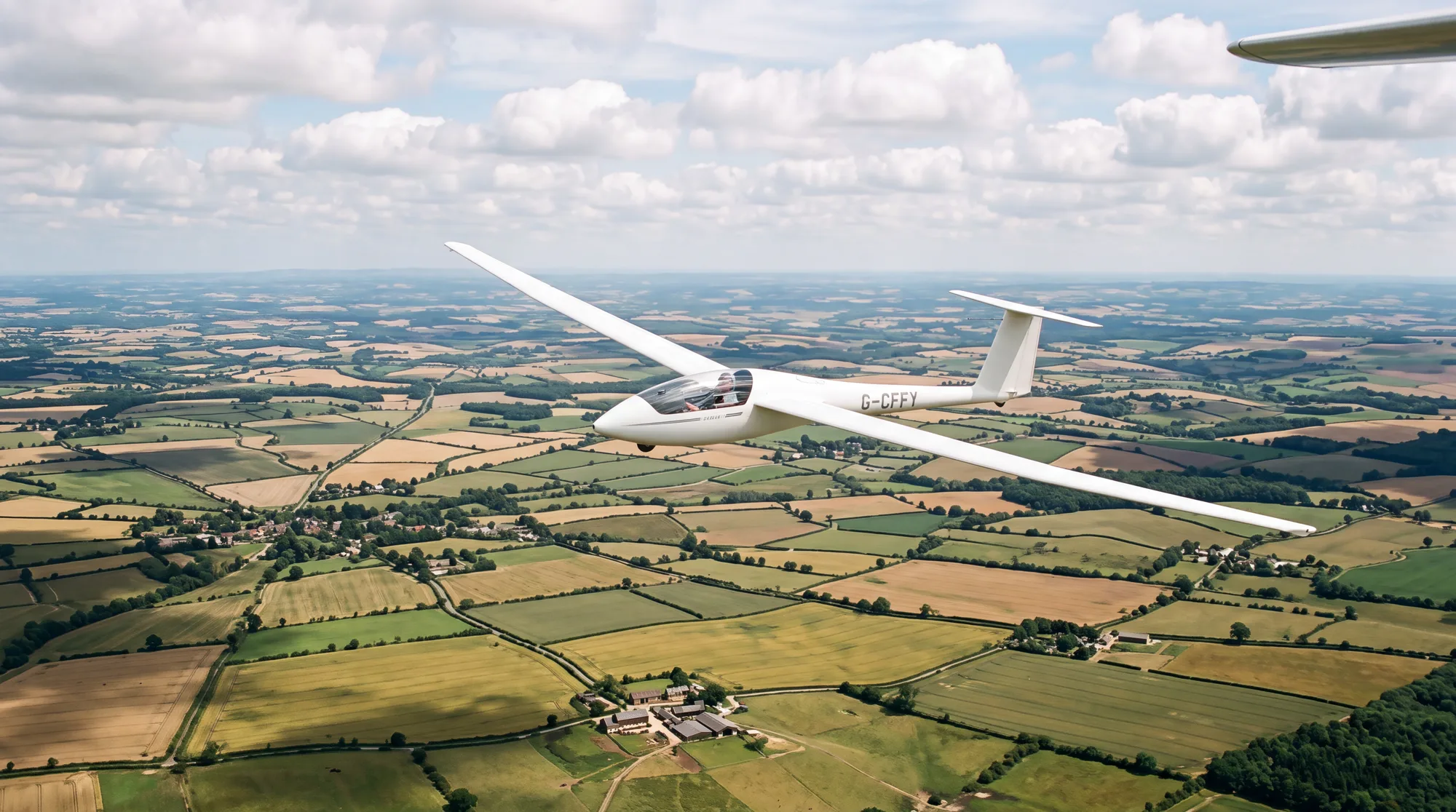
Gliding club management software runs the work behind a flying day. It keeps the launch order, aircraft serviceability, daily inspections, qualified duty roster, flight records, and member charges together. For a Soaring Society of America club, it must handle winch and aerotow operations without treating either as a simple room booking. The system also checks currency and check-flight needs before a member goes solo. GlideHQ is being built around those requirements. It is not a live product and has no public launch date.
The current flying day on your phone
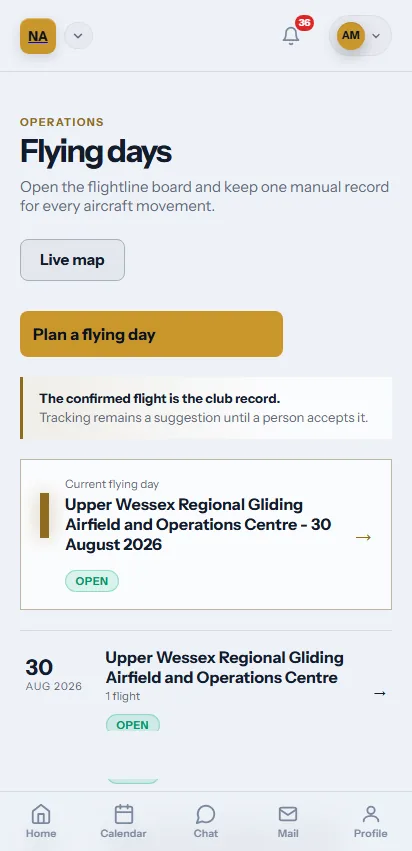
The screen comes from the GlideHQ build using a demo club. It shows today's flying day open at the airfield, a live map one tap away, and one club record for each aircraft movement. It does not show a launched service. It demonstrates how members and duty officers will reach the same current operational view.
- The open flying day is visible immediately, giving members the current status at the airfield.
- A live club map sits one tap away for the people following activity on site.
- Each aircraft movement creates one club record instead of another line to reconcile from paper.
GlideHQ on a phone, from the build running a demo club. Nothing to install.
What gliding asks for that generic club software does not do
Any club platform will hold your members and take your dues. These are the parts clubs end up running in a spreadsheet alongside it.
Record the inspection before the first launch
Every glider needs its daily inspection signed before flying. A booking calendar that only says available misses that gate. The aircraft record should show serviceability first and keep an unavailable machine away from the launch list.
Run a moving order, not fixed slots
Pilots join a flight list and move through it. Weather, check flights, and launch problems change the sequence during the day. Half-hour calendar appointments cannot represent how the line actually works.
Show missing duty cover early
The day depends on instructors, tow or winch people, and other duty roles being present. One gap can stop operations. A visible roster lets the board find cover before members reach the airfield.
Check currency before the launch line
Time since a member last flew, annual checks, and type conversion affect solo flying. Someone outside the requirements needs a check flight first. That information should guide the list before the glider reaches the launch point.
Build each account from actual flights
Winch launches, aerotows, and soaring time can carry different charges. Every movement must be recorded against the member and aircraft. The treasurer should not have to reconstruct the month from handwritten log sheets.
Keep winch and aerotow rules distinct
The two launch methods require different crews, briefings, and charges. A club operating both is running separate processes from the same field. The software must preserve those differences while keeping one club record.
What GlideHQ will handle
Daily flight order
Run the day's flight list and launch sequence without a whiteboard.
Aircraft status
Keep club gliders, towplanes, and maintenance status in one register.
Fair duty roster
Schedule instructors, winch drivers, and duty pilots across the roster fairly.
Flight records
Log launches and hours against the correct members and aircraft.
Member account
One login covers bookings, accounts, and the latest club updates.
Training progress
Keep progress and signoffs visible to every relevant instructor.
Plan ahead while GlideHQ is in build
GlideHQ is not ready for clubs to use. There is no live import service to offer. Keep using your current records while we build it.
What you may use now
- The flight line whiteboard
- Paper lists and flight logs
- A monthly billing spreadsheet
- Calls to fill duty gaps
List who keeps each record and where the latest copy lives.
-
Tell us which club job needs help
Describe the work you want to change, such as the duty list or member accounts. We can use that to discuss what the first version needs.
-
Use made-up examples
Share field names or a blank form if you want to explain a record. Do not send member details, payment data or private club files with an interest enquiry.
Tell us what you run now to help shape GlideHQ. Registering interest does not start an import.
Who is behind GlideHQ
There is no published gliding case study yet, and we are not going to invent one. What we can point at is the engine underneath. RowHQ runs Oundle Town Rowing Club day to day, with real members, real money and real race entries going through it.
GlideHQ is a different sport on the same foundation, built by the same people. It is in build, and founding clubs get a direct line to the people writing it.
Questions about gliding club management software
What is gliding club management software in the United States?
It is one system for the daily flight list, aircraft status, inspections, duty assignments, launches, member accounts, and training records. For a Soaring Society of America club, it replaces the flight line whiteboard, paper logs, and billing worksheet. GlideHQ is being built around moving launch orders and serviceability checks. It has not launched.
How much will GlideHQ cost a US club?
GlideHQ is still in build. Published pricing is free below 21 active members. The 21 to 30 member band costs $21 monthly excluding sales tax. The 251 to 300 band costs $160. Every feature is included throughout. There is no platform transaction fee, and card payments enter the club's own Stripe account.
Can it keep SafeSport and background check records?
The planned member record can hold relevant safeguarding information. National governing bodies run background checks for people they authorize to hold authority over athletes or have regular contact with them. Those checks last 24 months. Clubs still follow their governing body and U.S. Center for SafeSport requirements. GlideHQ will organize records but will not set the policy.
Will GlideHQ handle daily aircraft inspections?
Yes. Recording the inspection before the first launch is one of the core requirements shaping the build. An aircraft marked unserviceable should not appear available. That status will sit ahead of the flight list, so the club starts with the condition of the machine rather than correcting the schedule later.
Can it calculate charges from launches?
Yes. The build is intended to log winch launches, aerotows, and soaring time against both the pilot and the aircraft. Different launch methods can keep their own charges. The treasurer will have the underlying flight records instead of rebuilding member accounts from paper at month end.
Are there grants that would cover club software for a gliding club?
Often, yes. American clubs fund gear and running costs through programs like Good Sports, All Kids Play and Sports Matter, and an annual GlideHQ subscription is a small line beside those asks. Clubs under 21 active members pay nothing anyway, and annual billing is charged at ten months, so the request stays modest.
Register interest
Be first in line when GlideHQ launches, and help shape what gets built first.
The rest of the HQ family
One app per sport, sharing an engine underneath. Plenty of clubs run more than one.